
Skip to content
Top Mobility Aids

Best Walkers for Seniors

By the Top Mobility Aids Editorial Team · Updated October 15, 2026 · 12 min read

Senior woman walking at home with a folding front-wheeled walker while her daughter walks beside her

We may earn a commission if you purchase through links on this page at no additional cost to you. Our recommendations are based on independent research, product reviews from real users and caregivers, safety, comfort, ease of use, and overall value.

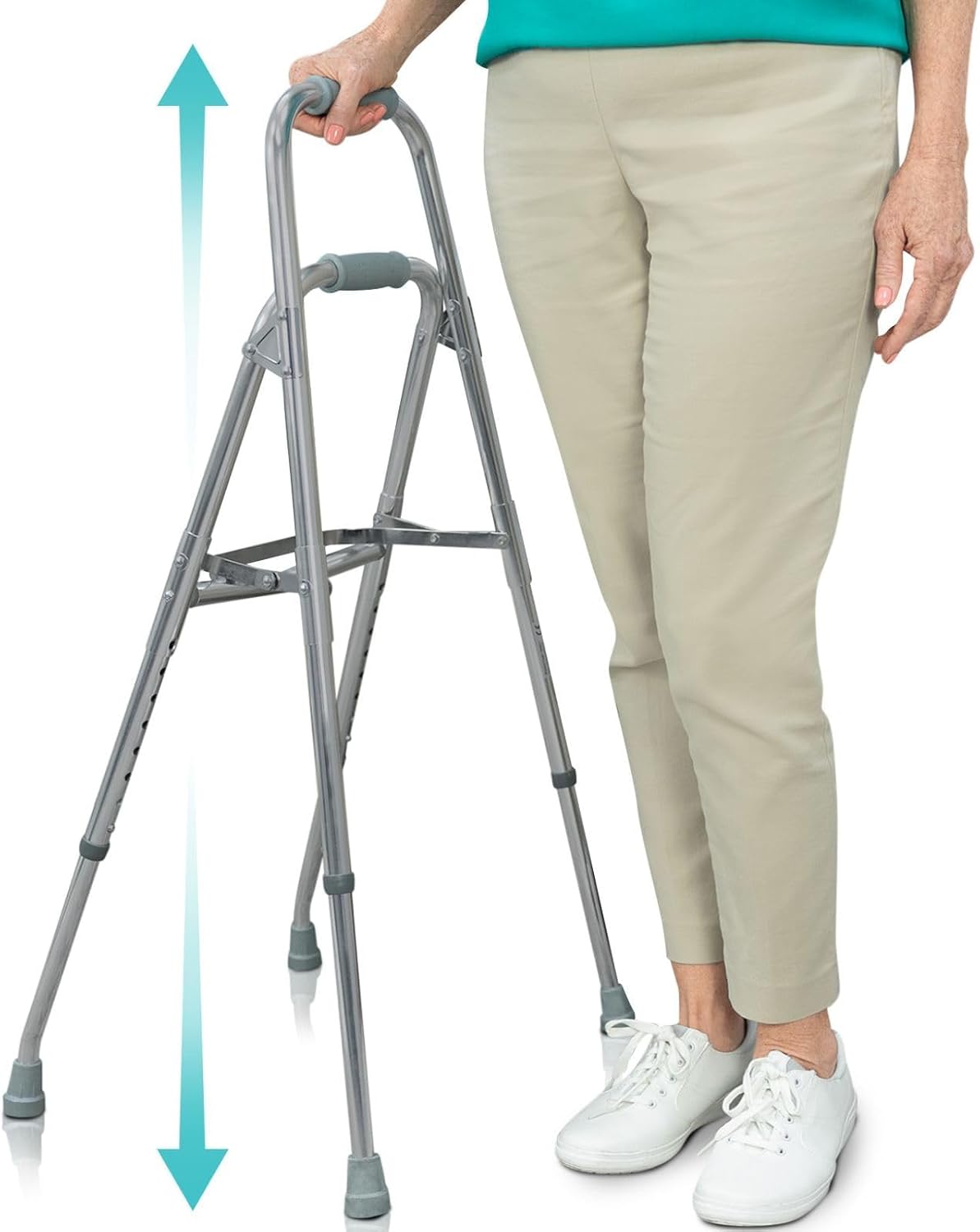
A walker is often the next step when a cane no longer feels like enough. It offers a wide, stable base on both sides of the body, which can help older adults feel steadier at home, recover after surgery or a hospital stay, and keep doing everyday things on their own. But walkers are not all the same. Wheels or no wheels, button or trigger folding, standard or bariatric, adult or junior size — each choice changes how the walker feels to use.

This guide explains the main types of walkers, compares six well-known models for different needs, and walks through fitting and safety so seniors and caregivers can choose with confidence. If the user needs a seat and brakes for longer outings, see our separate guide to the best rollator walker for seniors.

Table of contents
  1. Best Walkers at a Glance
  2. Walker Comparison Table
  3. Types of Walkers
  4. How We Chose
  5. Drive Two-Button Walker
  6. Medline Folding Walker
  7. Drive Trigger Release
  8. Vive Hemi Walker
  9. Medline Bariatric Walker
  10. Dynarex Junior Walker
  11. How to Choose a Walker
  12. How to Fit a Walker
  13. Walker Safety
  14. Frequently Asked Questions
  15. Final Verdict

Best Walkers for Seniors at a Glance

This page contains affiliate links. We may earn a commission from qualifying purchases at no additional cost to you.

Best Overall Walker

Drive Medical Deluxe Two-Button Folding Walker with Wheels

A familiar, well-supported design that balances stability with an easier, smoother walking rhythm than a pick-up walker.

Read full review

Best Budget Walker

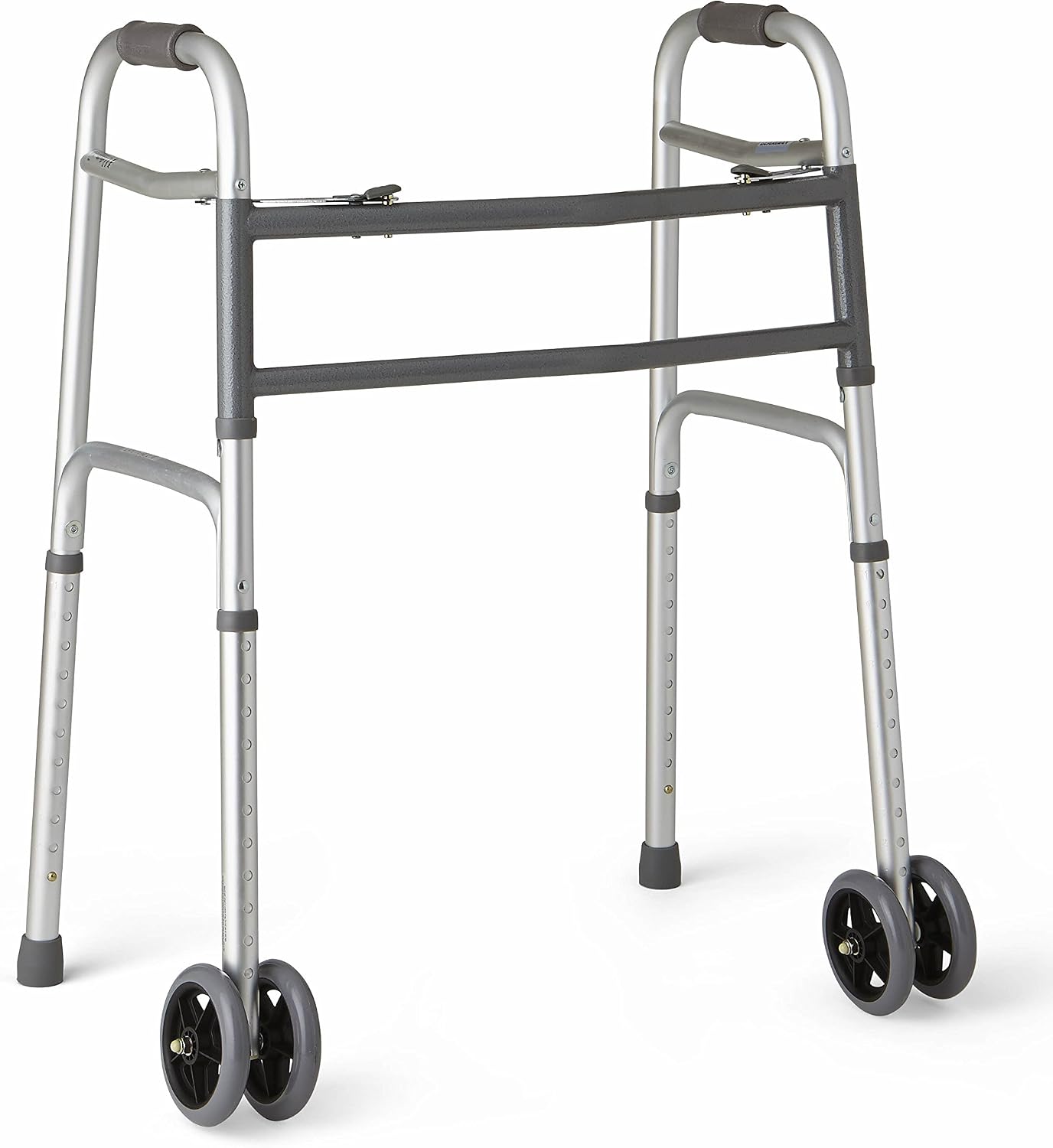
Medline Two-Button Folding Walker with Wheels

A no-frills, value-focused walker from a large medical-supply brand, often chosen as a first walker or a second one for another floor of the home.

Read full review

Best for Arthritis and Weak Hands

Drive Medical Trigger Release Folding Walker

Folds with a trigger near the handgrip instead of small side buttons, which many people with arthritis find easier.

Read full review

Best One-Handed Walker

Vive Medical Folding Hemi Walker

A one-sided walker used with a single hand, offering a wider base than a quad cane.

Read full review

Best Heavy-Duty Walker

Medline Heavy-Duty Bariatric Folding Walker

A wider, reinforced frame with a higher weight capacity than standard walkers.

Read full review

Best for Petite Seniors

Dynarex Junior Two-Button Folding Walker with Wheels

A shorter height range sized for petite adults who find adult walkers too tall even at the lowest setting.

Read full review

Walker Comparison Table

Swipe sideways on a phone to see every column. Confirm height range and weight capacity on the exact listing before buying.

This page contains affiliate links. We may earn a commission from qualifying purchases at no additional cost to you.

Comparison of the best walkers for seniors
WalkerBest ForTypeFoldingFeetCheck Price
Drive Two-Button WalkerOverall WalkerFront-wheeled standard walkerTwo-button side releaseFront wheels, rear glidesCheck Today's Price
Medline Folding WalkerBudget WalkerFront-wheeled standard walkerTwo-button side releaseFront wheels, rear glide capsCheck Today's Price
Drive Trigger Releasefor Arthritis and Weak HandsStandard walker (wheels optional)Hand-trigger releaseGlides; add-on wheels availableCheck Today's Price
Vive Hemi WalkerOne-Handed WalkerHemi (one-handed) walkerFolds flatRubber tipsCheck Today's Price
Medline Bariatric WalkerHeavy-Duty WalkerBariatric standard walkerFolding frameWheel and glide optionsCheck Today's Price
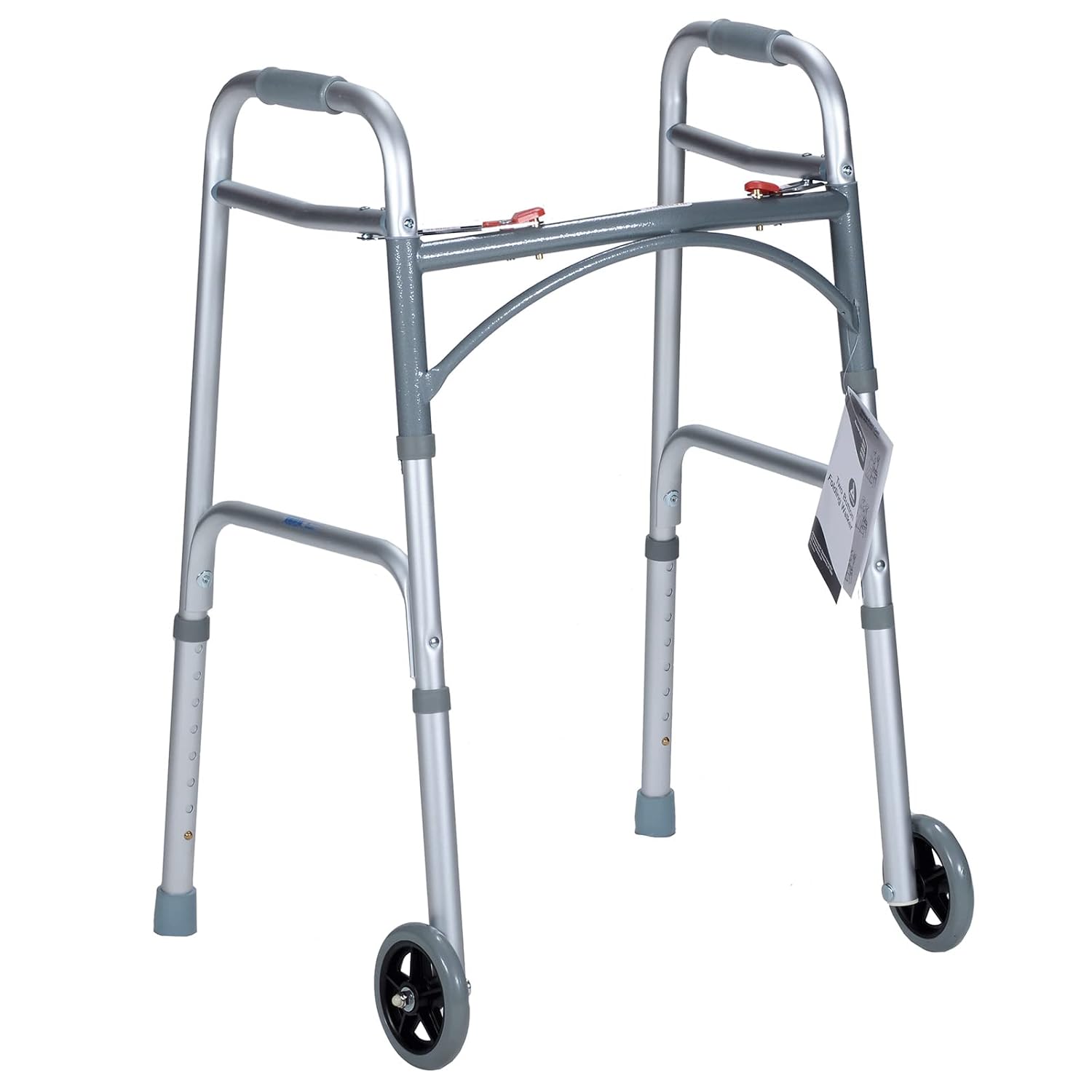
Dynarex Junior Walkerfor Petite SeniorsFront-wheeled standard walker (junior)Two-button side releaseFront wheels, rear glidesCheck Today's Price

Types of Walkers for Seniors

Standard (pick-up) walkers

Four legs with rubber tips and no wheels. The user lifts the walker, sets it down and steps into it. This gives the most stability of any walker, which is why it's common right after hip or knee surgery, but lifting it with every step can be tiring and slow.

Front-wheeled (two-wheel) walkers

Two front wheels and two rear legs with tips or glides. The walker rolls forward while the back legs add friction, allowing a more natural walking pattern with far less lifting. For many seniors this is the everyday sweet spot between stability and ease.

Hemi walkers

A single-sided frame used with one hand. Hemi walkers suit people with one-sided weakness, such as after a stroke, and offer a broader base than a quad cane.

Bariatric walkers

Reinforced, wider frames with higher weight capacities for larger users. They're sturdier but heavier and wider, so check doorways and car space.

Rollators (four-wheel walkers)

Three or four wheels, hand brakes and usually a seat. Rollators are better for longer walks and people who need to rest, but they require reliable brake control and are generally less stable than a standard walker for people who lean heavily on their aid.

How We Chose the Best Walkers for Seniors

We approached this guide the way a careful caregiver would: by comparing the details that affect safety, comfort and everyday convenience. We focused on established brands that are widely available, reviewed manufacturer information, and read feedback from users and caregivers. Our criteria included:

  • Stability and frame design
  • Wheel and glide options
  • Height adjustability
  • Weight capacity
  • Ease of folding
  • Grip comfort
  • Width for doorways
  • Portability
  • Suitability for specific conditions
  • Availability through Amazon

Rather than naming one winner for everyone, we matched each model to a specific need. Inclusion in this guide does not mean our editorial team has physically tested the product, and specifications should be confirmed on the exact listing.

This page contains affiliate links. We may earn a commission from qualifying purchases at no additional cost to you.

Best Overall Walker

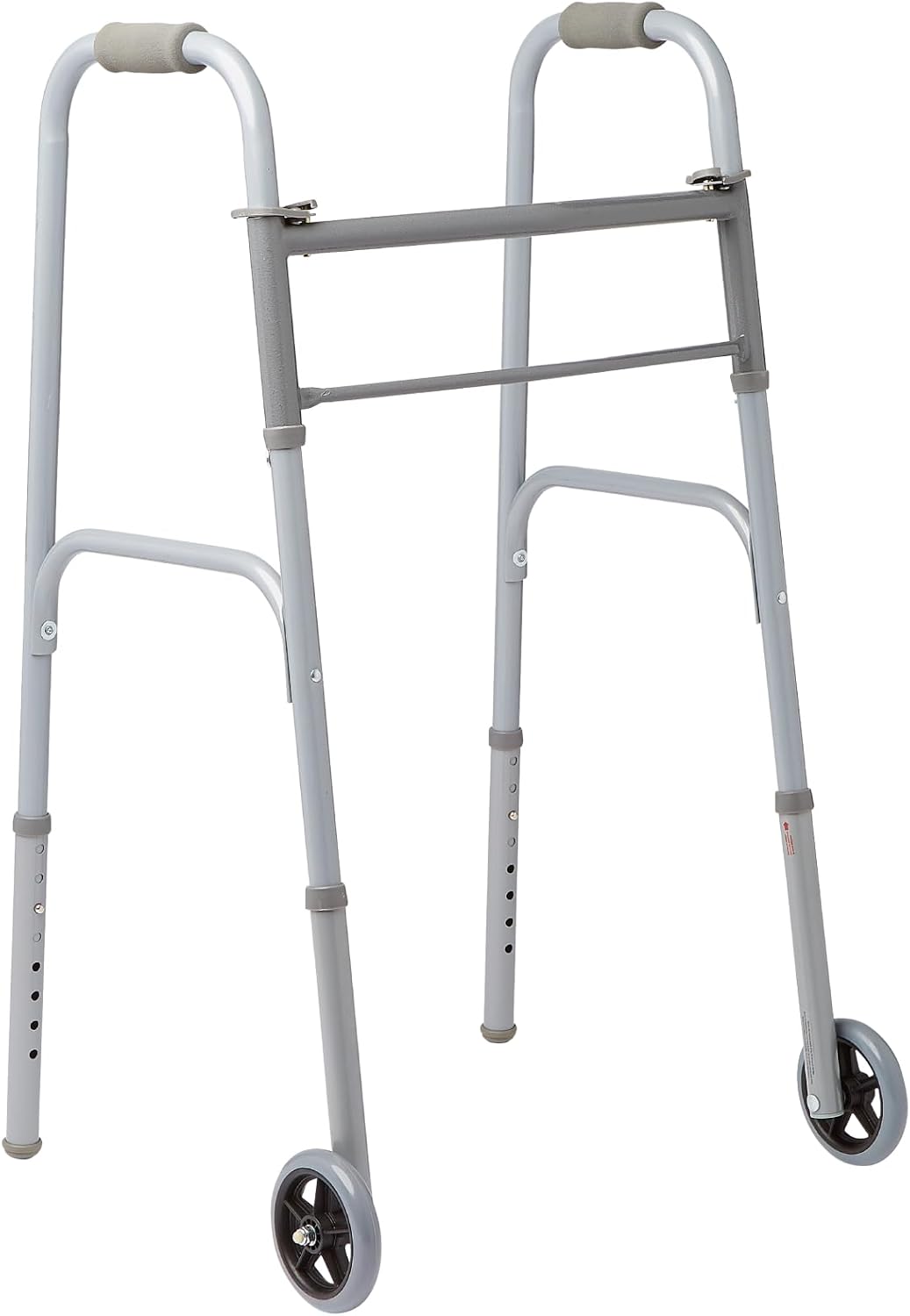
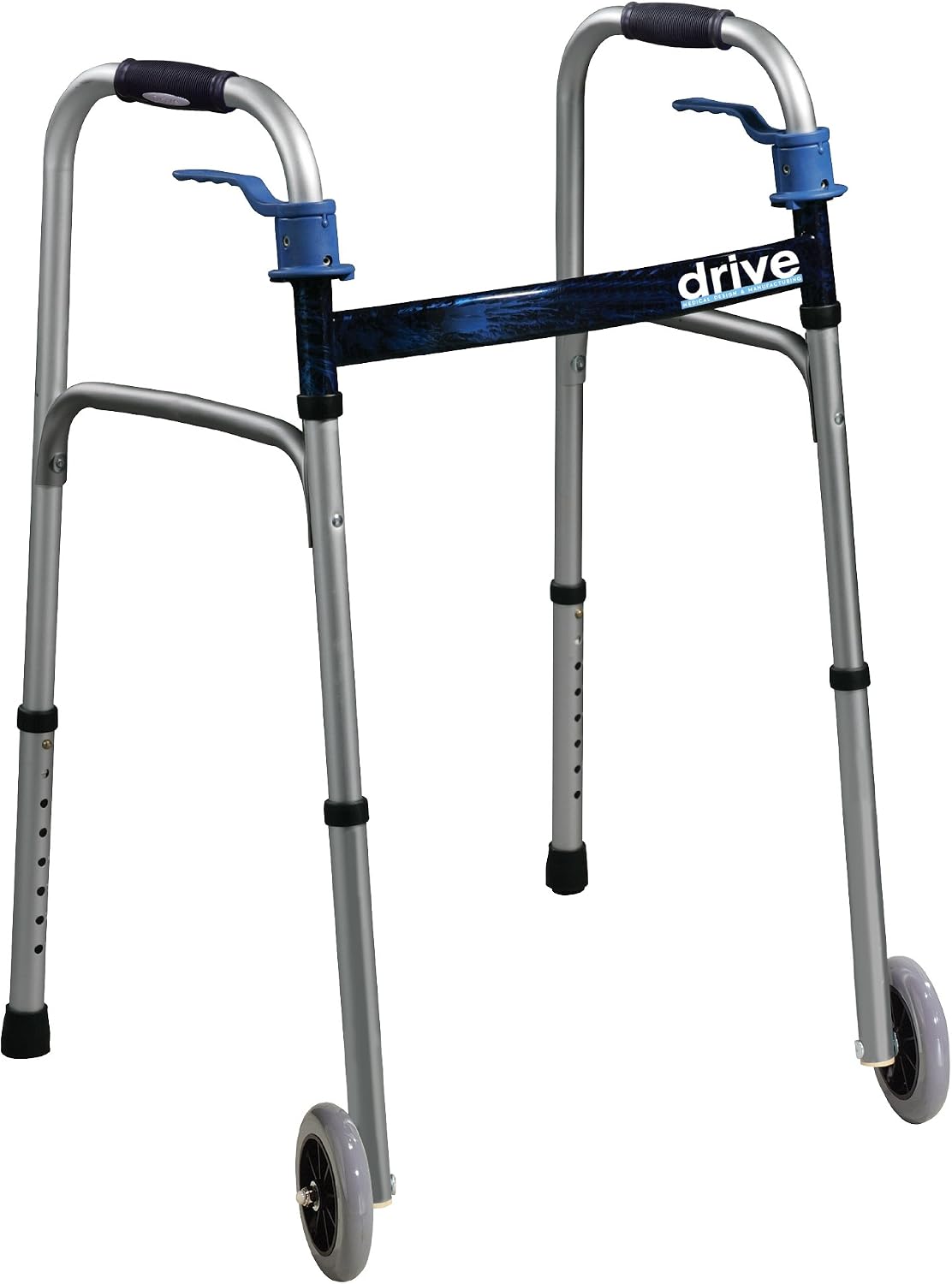
1. Drive Medical Deluxe Two-Button Folding Walker with Wheels – Best Overall Walker
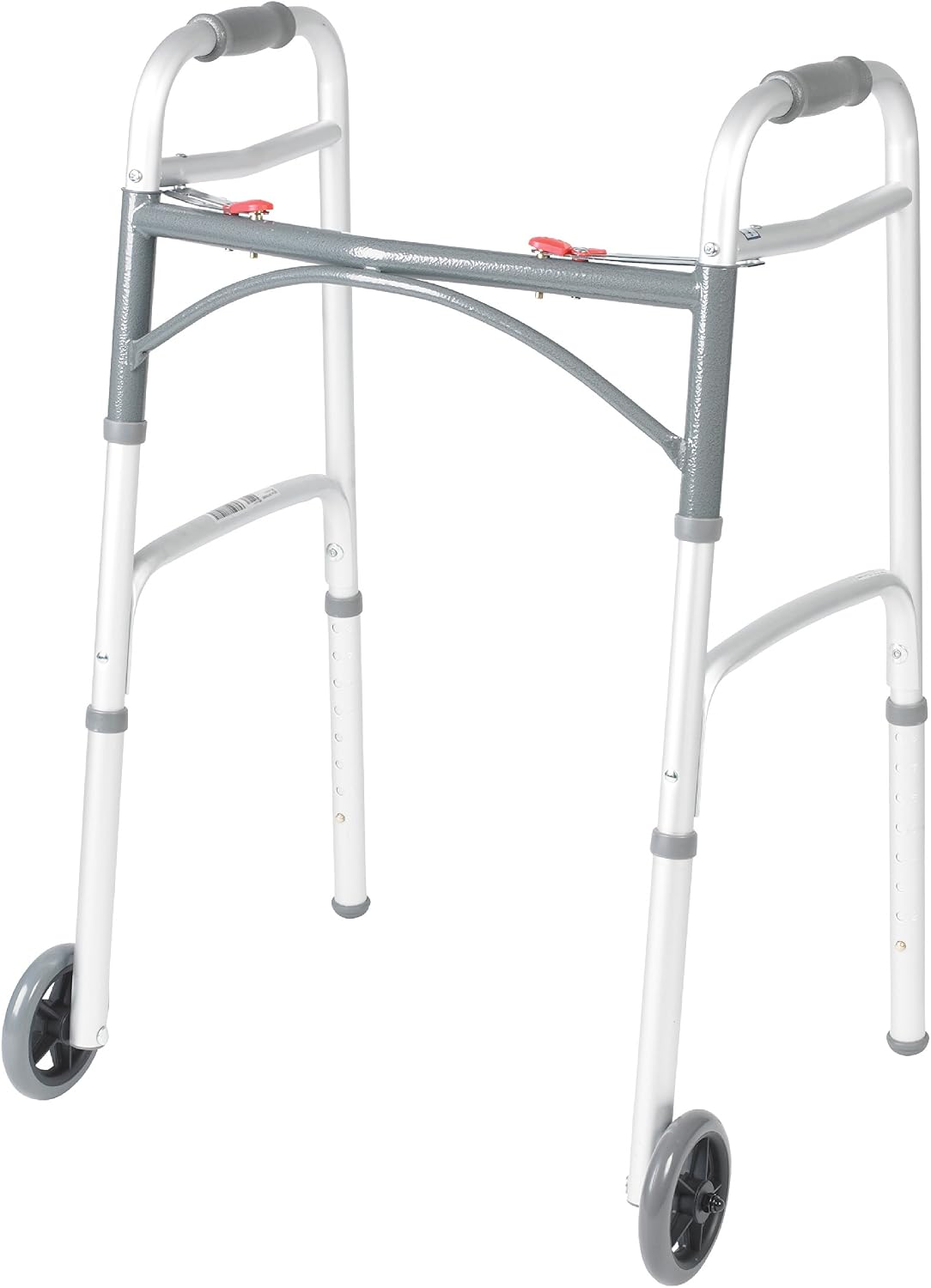
Drive Medical Deluxe Two-Button Folding Walker with Wheels

Quick verdict

For most seniors who need more support than a cane but don't need a seat, a two-button front-wheeled walker from an established brand is the practical starting point.

Key features

Type
Front-wheeled standard walker
Folding
Two-button side release
Feet
Front wheels, rear glides
Best for
Overall Walker

Height range, weight capacity and dimensions vary by variant — confirm them on the exact Amazon listing.

Who it suits

Front-wheeled walkers are often recommended for people who need steady, all-day support but can still walk in a continuous pattern. The two front wheels let the walker glide forward while the rear legs provide friction, so the user isn't asked to lift the frame with every step.

Day-to-day use

The two-button release folds the walker flat for a car trunk or closet. Height adjustment is done with push-pin legs, which is simple for a caregiver to set once. Many households add tennis-ball or ski glides to the rear legs for smoother movement on hard floors.

Things to check

Confirm the height range, weight capacity, wheel size and width on the exact listing, since Drive sells several similar variants. Measure bathroom doorways before buying.

What we like

  • Widely available, familiar design
  • Folds flat for cars and storage
  • Wheels reduce lifting and fatigue
  • Easy to fit with glides and accessories

What could be better

  • No seat for resting
  • Buttons can be stiff for arthritic hands
  • Not designed for rough outdoor terrain

Best for: Everyday indoor walking, post-surgery recovery and seniors moving from a cane to more support.
Best Budget Walker

2. Medline Two-Button Folding Walker with Wheels – Best Budget Walker

Medline Two-Button Folding Walker with Wheels

Quick verdict

A sensible budget choice when you want a basic, reliable front-wheeled walker without paying for extras.

Key features

Type
Front-wheeled standard walker
Folding
Two-button side release
Feet
Front wheels, rear glide caps
Best for
Budget Walker

Height range, weight capacity and dimensions vary by variant — confirm them on the exact Amazon listing.

Who it suits

Budget-conscious families, short-term recovery after a hospital stay, or anyone who wants a backup walker upstairs, at a vacation home or in the car.

Day-to-day use

Function is very similar to other two-button designs: push-pin height adjustment, a flat fold and front wheels with rear glides. Padded or foam grips vary by version.

Things to check

Verify current height range, weight capacity and whether wheels are included on the listing you choose; some Medline walkers are sold without wheels.

What we like

  • Affordable
  • Simple, lightweight-feeling frame
  • Good as a second walker

What could be better

  • Basic grips on some versions
  • Fewer adjustment refinements than premium models

Best for: Budget shoppers, temporary use and households that need more than one walker.

Best for Arthritis and Weak Hands

3. Drive Medical Trigger Release Folding Walker – Best for Arthritis and Weak Hands

Drive Medical Trigger Release Folding Walker

Quick verdict

Worth considering if pressing small buttons is painful or difficult for the user or caregiver.

Key features

Type
Standard walker (wheels optional)
Folding
Hand-trigger release
Feet
Glides; add-on wheels available
Best for
for Arthritis and Weak Hands

Height range, weight capacity and dimensions vary by variant — confirm them on the exact Amazon listing.

Who it suits

People with arthritis, reduced grip strength or limited finger dexterity who still want a standard walker.

Day-to-day use

Folding is controlled from the handle area, so the user doesn't need to bend down to reach side buttons. Wheels can be added to the front legs for a smoother gait if a clinician recommends it.

Things to check

Confirm whether the version you choose includes wheels, and check the height range and capacity on the listing.

What we like

  • Easier folding for weak hands
  • No bending to reach buttons
  • Can be configured with or without wheels

What could be better

  • Wheels may be sold separately
  • Slightly different feel from classic two-button walkers

Best for: Arthritis, reduced hand strength and anyone who struggles with push buttons.

Best One-Handed Walker

4. Vive Medical Folding Hemi Walker – Best One-Handed Walker

Vive Medical Folding Hemi Walker

Quick verdict

A specialist option for people who can only use one hand, often after a stroke. Best chosen with a therapist's input.

Key features

Type
Hemi (one-handed) walker
Folding
Folds flat
Feet
Rubber tips
Best for
One-Handed Walker

Height range, weight capacity and dimensions vary by variant — confirm them on the exact Amazon listing.

Who it suits

People with weakness on one side of the body, such as after a stroke, who need more stability than a cane but cannot grip a standard two-handled walker.

Day-to-day use

The Vive hemi walker is held with one hand on the user's stronger side. Its folding frame and rubber-tipped feet suit a lift-and-place walking pattern rather than rolling forward. A therapist can demonstrate how to position it and coordinate each step.

Things to check

Confirm the Vive listing's handle height range, weight capacity, overall width and folding instructions. A physical or occupational therapist can advise whether this hemi walker or a quad cane is the better fit and which hand to use.

What we like

  • Usable with one hand
  • Wider base than a quad cane
  • Folds for storage

What could be better

  • Not a substitute for a standard walker when both hands work
  • Requires training for correct use

Best for: Stroke recovery and one-sided weakness.

Best Heavy-Duty Walker

5. Medline Heavy-Duty Bariatric Folding Walker – Best Heavy-Duty Walker

Medline Heavy-Duty Bariatric Folding Walker

Quick verdict

The right category for larger or taller users who need a reinforced frame. Measure doorways first, because bariatric walkers are wider.

Key features

Type
Bariatric standard walker
Folding
Folding frame
Feet
Wheel and glide options
Best for
Heavy-Duty Walker

Height range, weight capacity and dimensions vary by variant — confirm them on the exact Amazon listing.

Who it suits

Users whose weight is close to or above the capacity of standard walkers, or who want a wider space between the handles.

Day-to-day use

Reinforced tubing and a wider stance add stability but also bulk, so it can be harder to lift into a car or pass through narrow bathroom doors.

Things to check

Confirm the listed weight capacity, inside width and overall width. Choose a capacity with comfortable headroom above the user's weight.

What we like

  • Higher weight capacity
  • Wider space between handles
  • Sturdy, reinforced frame

What could be better

  • Heavier and bulkier
  • May not fit narrow doorways

Best for: Larger users and anyone who needs a higher weight capacity.

Best for Petite Seniors

6. Dynarex Junior Two-Button Folding Walker with Wheels – Best for Petite Seniors

Dynarex Junior Two-Button Folding Walker with Wheels

Quick verdict

If an adult walker can't be lowered enough for the user's wrists, a junior-size frame is usually the fix.

Key features

Type
Front-wheeled standard walker (junior)
Folding
Two-button side release
Feet
Front wheels, rear glides
Best for
for Petite Seniors

Height range, weight capacity and dimensions vary by variant — confirm them on the exact Amazon listing.

Who it suits

Petite seniors, typically those under about five feet tall, who end up shrugging or hunching with standard-height walkers.

Day-to-day use

The Dynarex junior model combines two-button folding with front wheels in a frame sized for shorter users. The front wheels reduce the need to lift the walker at each step. Check the rear tips or glides supplied with the selected listing and follow its setup instructions.

Things to check

Compare the Dynarex listing's handle height range with the user's wrist height while standing upright in everyday shoes. Confirm its weight capacity, overall width and folded dimensions rather than assuming they match an adult model.

What we like

  • Proper fit for shorter users
  • Compact for small spaces
  • Same familiar two-button fold

What could be better

  • Too short for average-height adults
  • Lower weight capacity on some versions

Best for: Petite and shorter seniors.

How to Choose the Best Walker for a Senior

1. Match the walker to how the person walks

Someone who needs maximum support or is not yet allowed to put full weight on a leg may be advised to use a standard walker without wheels. Someone who can walk in a steady rhythm often does better with front wheels. If the person walks longer distances and needs to rest, a rollator may be more suitable. A physical therapist can assess which type fits best.

2. Check the height range

The walker must adjust to the user's wrist height. Petite adults may need a junior size; very tall adults may need a tall or bariatric model.

3. Confirm weight capacity

Choose a capacity with comfortable headroom above the user's weight. Bariatric frames exist for users near or above standard limits.

4. Measure doorways and hallways

Compare the walker's overall width with bathroom doors, hallways and the space between furniture. Bathroom doorways are often the narrowest spot in a home.

5. Consider hands and grip

People with arthritis may find small side buttons painful. Trigger-release folding, larger buttons and padded or contoured grips can help.

6. Think about storage and transport

Most walkers fold flat. Check the folded size if the walker will ride in a car trunk or be stored in a small apartment.

7. Plan for accessories

Glide caps help rear legs slide on hard floors, while walker bags, trays and cup holders keep hands free for the grips. Keep loads light so the walker doesn't tip forward.

How to Fit a Walker Correctly

  1. Have the user stand upright in everyday shoes, arms relaxed at their sides.
  2. Adjust each leg so the handgrips sit near wrist level.
  3. When holding the grips, the elbows should have a slight, comfortable bend.
  4. Make sure every push-pin clicks fully into the same hole on all legs.
  5. Confirm the walker is fully open and locked before each use.

A walker that is too low encourages stooping; too high pushes the shoulders up. When in doubt, a physical therapist can fit the walker and teach safe use on turns, curbs and chairs.

Walker Safety Tips

  • Step into the walker rather than pushing it far ahead.
  • Keep the walker close when turning; turn in small steps.
  • Don't pull on the walker to stand up — push up from the chair arms, then reach for the grips.
  • Remove loose rugs and cords, and add night lights along walking paths.
  • Check rubber tips, glides and wheels regularly and replace worn parts.
  • Never use a standard walker on stairs without professional instruction.
  • Follow manufacturer weight limits and instructions.

This information is general and is not individualized medical advice.

Frequently Asked Questions About Walkers for Seniors

What is the best type of walker for seniors?

For many seniors, a front-wheeled standard walker is a good balance of stability and ease of movement. People who need maximum stability may do better with a standard walker without wheels, while those who walk farther and want a seat may prefer a rollator. A physical therapist can recommend the right type.

What is the difference between a walker and a rollator?

A standard walker has four legs, with or without two front wheels, and is lifted or slid forward. A rollator has three or four wheels, hand brakes and usually a seat. Standard walkers tend to offer more stability; rollators are better for longer distances and people who need to rest.

Are walkers with wheels or without wheels better?

Walkers without wheels offer the most stability but must be lifted with each step. Front wheels let the walker glide, which many people find less tiring. The best choice depends on balance, strength and how the person walks.

How do I adjust a walker to the right height?

With the user standing upright and arms relaxed, the handgrips are commonly set near wrist level, allowing a slight bend in the elbows when holding them. Use the push-pin adjustments so all four legs match.

Does Medicare cover walkers?

Medicare Part B may cover walkers as durable medical equipment when prescribed by a doctor as medically necessary and supplied by an enrolled supplier. Coverage and costs vary, so confirm with Medicare or your plan before buying.

Can a walker be used on stairs?

Standard walkers are not designed for climbing stairs. Anyone who must use stairs should get instruction from a physical therapist and use a handrail; some households keep a second walker on each floor.

What accessories are useful for walkers?

Common add-ons include glide caps or tennis-ball glides for rear legs, walker bags or baskets, cup holders and padded grip covers. Avoid heavy loads that make the walker tip forward.

How long does a walker last?

With regular checks of tips, glides, wheels and push-pins, a walker can last for years. Replace worn rubber tips and any part that wobbles or no longer locks securely.

Our Verdict on the Best Walker for Seniors

For most seniors who need dependable everyday support, a two-button front-wheeled folding walker such as the Drive Medical Deluxe is the practical place to start. Another type may be a better fit depending on the user:

  • Medline Folding Walker: budget walker
  • Drive Trigger Release: for arthritis and weak hands
  • Vive Hemi Walker: one-handed walker
  • Medline Bariatric Walker: heavy-duty walker
  • Dynarex Junior Walker: for petite seniors

The best walker is the one that fits the user's body, home and walking pattern — and that they feel confident using every day.