Skip to content
Top Mobility Aids

Senior care · Independent living · Product reviews

Best Mobility Aids for Seniors, Caregivers and Families

Choosing mobility equipment shouldn't feel like guesswork. This guide walks through the best mobility aids and assistive devices available today — walking aids, rollator walkers, mobility scooters, electric wheelchairs, stairlifts, lift recliners, grab bars and bathroom safety equipment — with honest pros and cons, realistic prices, weight capacities and practical buying advice from caregivers who use this equipment every day.

By
Top Mobility Aids Editorial Team
Published
March 4, 2026
Updated
September 12, 2026
Read time
24 min read

Affiliate & medical disclosure: We may earn a commission if you purchase through links on this page at no additional cost to you. Our recommendations are based on independent research, product reviews from real users and caregivers, safety, comfort, ease of use, and overall value. This content is for informational purposes only and is not a substitute for professional medical advice — please consult a doctor, occupational therapist, or physical therapist about your individual mobility needs.

Explore Top Mobility Aids
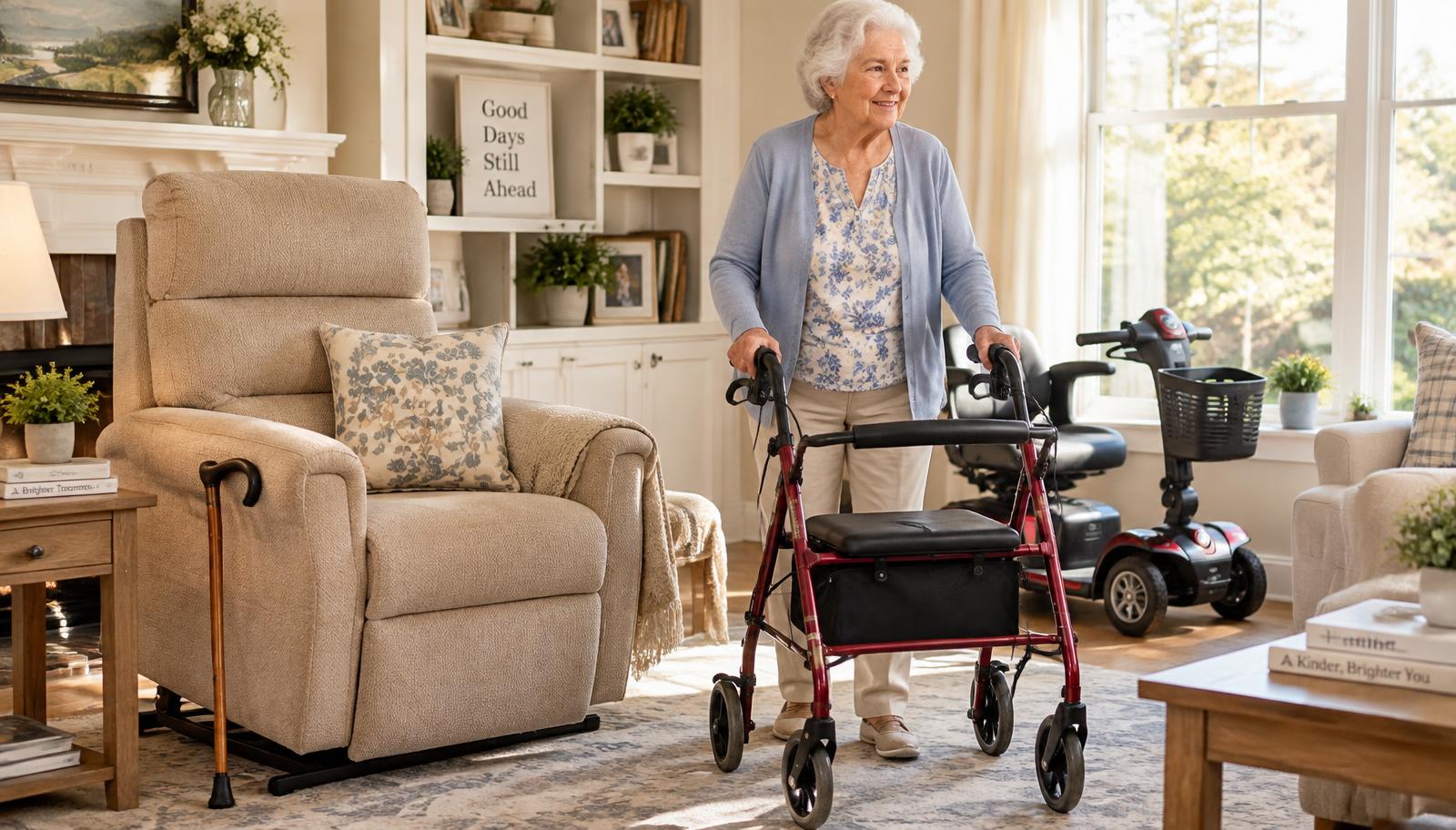
Bright home living room with a senior using a rollator walker beside a lift recliner chair, a walking cane and a mobility scooter nearby

Quick answer

Best Mobility Aids and Devices at a Glance

Fourteen mobility devices our editors and caregiver reviewers keep coming back to, scored on safety, comfort, ease of use and value. Jump straight to any full review.

Walking Aids Editor's Pick

Rollator Walker with Seat

Best for:
Everyday walking support and built-in rest breaks
Price:
$90–$350
Weight:
12–22 lbs
Durability:
High
Ease of use:
Easy
Value:
Excellent · Essential
Quick jump
Walking Aids

Adjustable Walking Cane

Best for:
Mild balance support and confidence on uneven ground
Price:
$15–$60
Weight:
0.7–1.5 lbs
Durability:
High
Ease of use:
Very easy
Value:
Excellent · Essential
Quick jump
Powered Mobility Editor's Pick

Travel Mobility Scooter

Best for:
Long distances, shopping, fairs and family outings
Price:
$700–$3,000
Weight:
45–120 lbs (disassembles)
Durability:
High
Ease of use:
Moderate
Value:
Very good · Optional
Quick jump
Powered Mobility

Folding Electric Wheelchair

Best for:
Full-time seated mobility indoors and out
Price:
$1,200–$5,000
Weight:
50–85 lbs
Durability:
High
Ease of use:
Moderate
Value:
Good · Optional
Quick jump
Home Access

Straight-Rail Stairlift

Best for:
Staying in a two-story home safely
Price:
$2,500–$6,000 installed
Weight:
Permanently installed
Durability:
Very high
Ease of use:
Easy
Value:
Good · Optional
Quick jump
Comfort & Seating Editor's Pick

Power Lift Recliner Chair

Best for:
Standing up from a seated position without help
Price:
$500–$2,500
Weight:
Furniture (delivered)
Durability:
High
Ease of use:
Very easy
Value:
Very good · Optional
Quick jump
Bathroom Safety Editor's Pick

ADA-Rated Grab Bars

Best for:
Bathroom and hallway fall prevention
Price:
$20–$80 each
Weight:
1–3 lbs
Durability:
Very high
Ease of use:
Easy once installed
Value:
Outstanding · Essential
Quick jump
Fall Prevention

Medical Alert Device with Fall Detection

Best for:
Seniors living alone or home during the day
Price:
$25–$60/month
Weight:
1–2 oz pendant
Durability:
High
Ease of use:
Very easy
Value:
Excellent · Essential
Quick jump
Bathroom Safety

Adjustable Shower Chair or Bath Bench

Best for:
Safe, unhurried bathing
Price:
$35–$150
Weight:
6–12 lbs
Durability:
High
Ease of use:
Very easy
Value:
Outstanding · Essential
Quick jump
Recovery

Knee Scooter / Knee Walker

Best for:
Foot, ankle or lower-leg recovery
Price:
$120–$350
Weight:
20–25 lbs
Durability:
High
Ease of use:
Easy
Value:
Excellent · Optional
Quick jump
Caregiver Supplies

Gait / Transfer Belt

Best for:
Safe caregiver-assisted standing and transfers
Price:
$15–$45
Weight:
Under 1 lb
Durability:
High
Ease of use:
Easy with training
Value:
Outstanding · Essential
Quick jump
Daily Living Aids

Reacher / Grabber Tool

Best for:
Avoiding bending, reaching and step stools
Price:
$12–$35
Weight:
0.5 lb
Durability:
Medium
Ease of use:
Very easy
Value:
Outstanding · Essential
Quick jump
Home Access

Portable Threshold or Folding Ramp

Best for:
Doorway thresholds, single steps and vehicle loading
Price:
$50–$400
Weight:
8–45 lbs
Durability:
High
Ease of use:
Easy
Value:
Very good · Optional
Quick jump
Home Safety

Bed Assist Rail

Best for:
Getting in and out of bed independently
Price:
$30–$120
Weight:
5–12 lbs
Durability:
High
Ease of use:
Easy
Value:
Very good · Optional
Quick jump

Mobility Aids Comparison Table

Side-by-side comparison of the top mobility equipment in this guide. Scroll horizontally on a phone.

Comparison of the best mobility aids by best use, price, weight, durability, value and editor rating
Mobility AidBest ForPriceWeightDurabilityValueEditor RatingJump
Rollator Walker with Seat★Everyday walking support and built-in rest breaks$90–$35012–22 lbsHighExcellent4.8/5Read review
Adjustable Walking CaneMild balance support and confidence on uneven ground$15–$600.7–1.5 lbsHighExcellent4.6/5Read review
Travel Mobility Scooter★Long distances, shopping, fairs and family outings$700–$3,00045–120 lbs (disassembles)HighVery good4.5/5Read review
Folding Electric WheelchairFull-time seated mobility indoors and out$1,200–$5,00050–85 lbsHighGood4.4/5Read review
Straight-Rail StairliftStaying in a two-story home safely$2,500–$6,000 installedPermanently installedVery highGood4.5/5Read review
Power Lift Recliner Chair★Standing up from a seated position without help$500–$2,500Furniture (delivered)HighVery good4.7/5Read review
ADA-Rated Grab Bars★Bathroom and hallway fall prevention$20–$80 each1–3 lbsVery highOutstanding4.9/5Read review
Medical Alert Device with Fall DetectionSeniors living alone or home during the day$25–$60/month1–2 oz pendantHighExcellent4.7/5Read review
Adjustable Shower Chair or Bath BenchSafe, unhurried bathing$35–$1506–12 lbsHighOutstanding4.8/5Read review
Knee Scooter / Knee WalkerFoot, ankle or lower-leg recovery$120–$35020–25 lbsHighExcellent4.6/5Read review
Gait / Transfer BeltSafe caregiver-assisted standing and transfers$15–$45Under 1 lbHighOutstanding4.7/5Read review
Reacher / Grabber ToolAvoiding bending, reaching and step stools$12–$350.5 lbMediumOutstanding4.5/5Read review
Portable Threshold or Folding RampDoorway thresholds, single steps and vehicle loading$50–$4008–45 lbsHighVery good4.4/5Read review
Bed Assist RailGetting in and out of bed independently$30–$1205–12 lbsHighVery good4.3/5Read review

Start here

Best Overall Mobility Aids

If you only read one section, read this one. These are the mobility devices that change the most days for the most people, regardless of budget or diagnosis.

Mobility aids are not a sign that independence is ending — in almost every case they are the reason it continues. The most common pattern we see in caregiver reviews is the same: someone waits too long, has a fall or a scare, and then buys five things at once in a hurry. Choosing deliberately, in the right order, produces better equipment at a lower total cost.

Our picks below are judged on safety, comfort, ease of use, weight capacity, durability and value — not on brand names or marketing claims. We deliberately avoid “as seen on TV” mobility gadgets: suction bars sold as weight-bearing supports, one-size canes with fixed heights, and ultra-cheap wheelchairs with ratings no manufacturer will document. Where a product only suits certain people, we say so.

The four purchases that matter most: grab bars in the bathroom, a correctly fitted walking aid, a shower chair or transfer bench, and a medical alert device with fall detection for anyone alone during the day. Together those cost a few hundred dollars and address walking, bathing, toileting and emergency response.

Walking AidsEssential Editor's Pick

Rollator Walker with Seat

Rated 4.8/5$90–$35012–22 lbsDurability: High

A rollator is a four-wheeled walking frame with hand brakes, a padded seat and a storage bag or basket. For most seniors who can walk but tire quickly or feel unsteady, it is the single most useful piece of mobility equipment you can own. Unlike a standard folding walker, a rollator rolls with you, so you keep a natural walking rhythm instead of lifting and placing a frame with every step.

Why you need it

Fatigue and hesitation are two of the biggest reasons people stop leaving the house. A rollator gives you a stable place to hold on, a seat to rest on whenever you need it, and somewhere to carry a bag, water bottle or oxygen tank. Caregivers consistently tell us it is the product that restores the most day-to-day freedom, because errands and appointments stop feeling like endurance events.

Key features

  • Four wheels with loop-style hand brakes and parking locks
  • Padded seat and backrest for rest stops
  • Height-adjustable handles to fit your wrist crease
  • Folding frame for car trunks and hallway storage
  • Under-seat bag or removable basket

Pros

  • Keeps a natural, continuous walking gait
  • Built-in seat encourages longer outings
  • Carries belongings so hands stay free
  • Wide range of budgets, widths and weight capacities

Cons

  • Needs hand strength to operate brakes safely
  • Heavier steel models are hard to lift into a trunk
  • Not appropriate if you lean heavily or need full weight-bearing support

Best for: Everyday walking support and built-in rest breaks

Buying tips: Measure from the floor to your wrist crease while standing upright with shoes on — that is your handle height. Choose 8-inch wheels for smooth indoor floors and 10-inch or larger for sidewalks, gravel and grass. Check the seat width and the weight capacity (commonly 250–300 lbs standard, 400–500 lbs bariatric) before anything else, and weigh the folded frame if you will lift it into a car.

Alternatives: A standard two-wheel walker costs less and offers firmer support indoors; an upright rollator with forearm platforms helps people who stoop forward; activator poles suit active seniors who only need light balance support.
Powered MobilityOptional Editor's Pick

Travel Mobility Scooter

Rated 4.5/5$700–$3,00045–120 lbs (disassembles)Durability: High

Travel scooters split into three or four pieces so the heaviest part is typically 25–35 lbs, letting a caregiver load them into a trunk without a lift. Full-size scooters ride better outdoors but usually need a vehicle lift or ramp.

Why you need it

Walking endurance, not walking ability, is what keeps many seniors home. A scooter turns a museum visit, a grandchild's ball game or a full grocery run back into something ordinary.

Key features

  • Lithium or sealed lead-acid battery, typically 8–18 miles of range
  • Tiller-mounted throttle with variable speed dial
  • Swivel seat and adjustable armrests for easier transfers
  • Disassembles into 3–5 pieces or folds automatically
  • Front basket and rear anti-tip wheels

Pros

  • Dramatically extends outing distance
  • Seated comfort with back support
  • Airline-friendly lithium models exist for travel

Cons

  • Real-world range is often 60–70% of the advertised figure
  • Needs turning space and a charging spot at home
  • Rarely covered by Medicare for outdoor-only use

Best for: Long distances, shopping, fairs and family outings

Buying tips: Match the ground clearance and tire size to where you will actually ride. Confirm the total weight capacity including groceries, and if you plan to fly, check that the battery is under 300 watt-hours and carriers accept it. Always ask about the turning radius before ordering — 40 inches or less handles most home hallways.

Alternatives: A folding electric wheelchair is easier indoors; a manual transport chair is far cheaper for occasional assistance; a knee scooter is the right answer for a single-leg injury.

Comfort & SeatingOptional Editor's Pick

Power Lift Recliner Chair

Rated 4.7/5$500–$2,500Furniture (delivered)Durability: High

A lift recliner tilts the whole seat forward and upward until the user is nearly standing, then reclines for napping and elevating legs. Two-position chairs recline slightly, three-position chairs go nearly flat, and infinite-position chairs add independent leg and back control plus zero-gravity positioning.

Why you need it

Rising from a low sofa is one of the hardest movements of the day for anyone with knee, hip or back pain — and one of the most common moments a caregiver gets injured trying to help.

Key features

  • Motorized lift-to-stand mechanism
  • Two-, three- or infinite-position recline
  • Optional heat and massage
  • Battery backup so the chair lowers during outages
  • Wall-hugger designs for tight rooms

Pros

  • Preserves independent standing
  • Reduces caregiver lifting strain
  • Comfortable enough for all-day use or sleeping after surgery

Cons

  • Bulky and hard to move
  • Motors can fail outside warranty
  • Medicare covers only the lift mechanism, not the chair, and only with a prescription

Best for: Standing up from a seated position without help

Buying tips: Sit in one before buying if you possibly can — seat depth matters more than any spec sheet. Measure the doorway and the wall clearance, and choose a fabric that wipes clean. Ask whether delivery includes setup and removal of the old chair.

Alternatives: A chair riser cushion or seat-assist lifting pad costs a fraction as much; raising an existing chair on sturdy furniture risers helps in the short term.

Bathroom SafetyEssential Editor's Pick

ADA-Rated Grab Bars

Rated 4.9/5$20–$80 each1–3 lbsDurability: Very high

A properly installed grab bar anchored into studs or with heavy-duty toggle anchors supports 250–500 lbs. It is the highest-return safety purchase in the entire guide: a few dollars per bar against the leading cause of senior hospitalization.

Why you need it

Most bathroom falls happen at three moments — stepping into the tub, sitting down on the toilet, and standing back up. A bar at each of those points changes the outcome more than almost anything else you can buy.

Key features

  • Knurled or textured surface for wet hands
  • 12, 16, 24 and 36-inch lengths
  • Stainless, bronze and matte finishes that look like fixtures, not hospital hardware
  • Angled, straight and floor-to-ceiling pole options

Pros

  • Very low cost for a very large safety gain
  • Permanent and maintenance-free
  • Modern finishes blend into the bathroom

Cons

  • Needs correct installation into structure
  • Renters may need landlord approval
  • Towel bars are not substitutes and will pull out

Best for: Bathroom and hallway fall prevention

Buying tips: Never rely on drywall anchors alone. Mount horizontally or at a 45-degree angle beside the toilet (33–36 inches high) and inside the tub at entry and mid-wall. If you cannot drill, a floor-to-ceiling tension pole or a clamp-on tub rail is a legitimate alternative.

Alternatives: Suction grab bars for travel only (never for weight bearing), a toilet safety frame that bolts to the toilet, or a bedside assist rail.

Walking aids

Walking Aids Essentials: Canes, Walkers and Rollators

Match the aid to how much weight you need to take off your legs — this single decision matters more than brand, color or price.

Walking canes suit mild balance issues and take roughly a fifth of body weight off a painful joint. Standard walkers give the firmest support but require lifting the frame with each step, which suits slow indoor walking. Rollator walkers roll continuously, brake under your hands and carry a seat — the best fit for people who walk fine but tire or lose confidence over distance. Knee scooters solve a different problem entirely: a single non-weight-bearing leg after foot or ankle surgery.

Fit is not optional. A cane or walker set too high forces the shoulders up and the elbows out, which is both tiring and unstable; too low and the user stoops forward over the frame, shifting weight ahead of their feet. Both errors are common and both increase fall risk. One appointment with a physical therapist — often covered — is the best money in this entire guide.

Walking AidsEssential

Adjustable Walking Cane

Rated 4.6/5$15–$600.7–1.5 lbsDurability: High

A height-adjustable aluminum cane with an offset handle is the lowest-cost, lowest-friction walking aid there is. It takes roughly 20–25% of body weight off a sore hip, knee or ankle and gives the brain a stable reference point, which is often what unsteadiness really needs.

Why you need it

Many people who are not ready for a walker still hesitate on curbs, wet tile or unfamiliar rooms. A cane is small enough to carry everywhere, cheap enough to keep a spare in the car, and it signals to others in a crowd to give you space.

Key features

  • Push-button height adjustment, usually 30–39 inches
  • Offset or ergonomic handle that centers weight over the shaft
  • Replaceable non-slip rubber tip
  • Wrist strap and folding options for travel

Pros

  • Inexpensive and instantly available
  • Lightweight and easy to store or travel with
  • Discreet compared with larger equipment

Cons

  • Only modest weight relief
  • Easy to set at the wrong height without guidance
  • Falls over when set down unless it has a stand-up base

Best for: Mild balance support and confidence on uneven ground

Buying tips: Hold the cane in the hand opposite your weaker leg and set the handle at wrist height with your arm relaxed; your elbow should bend about 15–20 degrees. Replace worn tips at least once a year — a smooth, glazed tip is one of the most common avoidable slip hazards we see.

Alternatives: A quad cane adds a four-point base and stands on its own; a folding cane fits in a purse or glove box; a hurrycane-style pivoting base helps on uneven surfaces.

RecoveryOptional

Knee Scooter / Knee Walker

Rated 4.6/5$120–$35020–25 lbsDurability: High

A knee scooter supports the injured leg on a padded platform while the healthy leg pushes. For single-leg, non-weight-bearing recovery it is far less exhausting than crutches and keeps hands free via a basket.

Why you need it

Crutches load the shoulders and wrists and make carrying anything impossible. Most people recovering from foot or ankle surgery move faster, tire less and fall less on a knee scooter.

Key features

  • Adjustable knee platform height
  • Locking hand brakes and steering column
  • Front basket and all-terrain tire options
  • Folds for car transport
  • Typical 300 lb capacity

Pros

  • Much less fatiguing than crutches
  • Keeps hands free
  • Widely available to rent for short recoveries

Cons

  • Not suitable for knee or hip injuries
  • Awkward on stairs and tight bathrooms
  • Requires decent balance and steering control

Best for: Foot, ankle or lower-leg recovery

Buying tips: Rent rather than buy for recoveries under six weeks. Choose a steerable model with dual rear brakes, and get all-terrain wheels if you will use it outdoors. Confirm the knee platform adjusts tall enough for the user's height.

Alternatives: Forearm crutches, a hands-free crutch that straps to the thigh, or a standard walker for short household distances.

Walking & Mobility Aids

The right walking aid depends on how much weight you need to transfer off your legs and how much balance support you need. Getting this match wrong is the most common and most consequential mistake in mobility shopping.

  • Rollator Walker

    Four wheels, brakes and a seat. Best overall walking aid.

    View Product
  • Walking Cane

    Adjustable aluminum with offset handle; set at wrist height.

    View Product
  • Quad Cane

    Four-point base, stands alone, better for stroke recovery.

    View Product
  • Activator Poles

    Upright two-pole walking that encourages posture; good for active seniors.

    View Product
  • Knee Scooter

    For single-leg, non-weight-bearing recovery. Often rentable.

    View Product
  • Crutches

    Forearm crutches are kinder to the armpits and shoulders long term.

    View Product
  • Walker Basket

    Keeps hands on the handles instead of carrying items.

    View Product
  • Walker Ski Glides

    Replace tennis balls; glide over carpet and thresholds smoothly.

    View Product
  • Gait/Transfer Belt

    Essential caregiver equipment for assisted standing.

    View Product
  • Cane Caddy & Accessories

    Clips that keep a cane upright and within reach.

    View Product

Shopping for a rollator? Read our guide to the best rollator walker for seniors, comparing six models for everyday use, travel, budget, upright support, heavy-duty and petite users.

Need a standard walker instead? See our guide to the best walkers for seniors, covering front-wheeled, hemi, bariatric and petite walkers.

Considering a powered option? Read our guide to the best mobility scooters for seniors, comparing travel, mid-size and heavy-duty scooters for range, comfort and portability.

Powered mobility

Wheelchairs, Scooters and Powered Mobility Equipment

The largest investments in mobility equipment — and the category where insurance rules, battery range and turning radius matter most.

The practical question is simple: where will this be used? A mobility scooter shines outdoors — sidewalks, shopping centers, fairgrounds — and struggles in bathrooms and narrow halls. An electric wheelchair turns almost in place and handles indoor life, which is also why Medicare's coverage rules focus on in-home need. If you want insurance to contribute, begin with a face-to-face mobility evaluation before buying anything, because reimbursement after an out-of-pocket purchase is very difficult.

Battery honesty matters. Advertised range is measured with a light rider on flat ground with new cells; plan on 60–70% of that figure in real life, less on hills. Lithium packs are lighter and airline-friendlier; sealed lead-acid packs cost less and weigh more. Whatever you buy, use manufacturer-approved batteries and chargers only.

Powered MobilityOptional

Folding Electric Wheelchair

Rated 4.4/5$1,200–$5,00050–85 lbsDurability: High

Modern folding power wheelchairs use lithium batteries and joystick control, weigh a fraction of traditional power chairs, and turn in place — a real advantage in bathrooms and narrow hallways where a scooter cannot maneuver.

Why you need it

For someone who cannot walk household distances safely, a power wheelchair restores self-directed movement without depending on someone to push.

Key features

  • Joystick control mountable on either armrest
  • Turning radius around 30 inches
  • Removable lithium battery pack
  • Folds in seconds for transport
  • Typical range of 10–15 miles per charge

Pros

  • Works indoors where scooters do not fit
  • Lighter and more transportable than traditional power chairs
  • Often eligible for Medicare Part B coverage when prescribed for in-home use

Cons

  • Significant investment
  • Still heavy to lift
  • Repairs need a qualified dealer

Best for: Full-time seated mobility indoors and out

Buying tips: If you want insurance to help, start with a doctor's face-to-face mobility evaluation before you buy anything — Medicare generally covers equipment needed inside the home, and reimbursement after an out-of-pocket purchase is difficult. Confirm seat width with a tape measure across the hips plus two inches.

Alternatives: A mobility scooter for outdoor distance only; a manual wheelchair with a power-assist wheel kit; a lightweight transport chair for caregiver-pushed trips.

Home AccessOptional

Straight-Rail Stairlift

Rated 4.5/5$2,500–$6,000 installedPermanently installedDurability: Very high

A stairlift mounts to the stair treads — not the wall — and carries a seated rider between floors with a simple rocker switch. Straight runs are the affordable case; curved staircases require a custom rail and typically cost considerably more.

Why you need it

Stairs are where the most serious home falls happen. For families weighing a move or a first-floor conversion, a stairlift is frequently the cheaper and less disruptive answer.

Key features

  • Swivel seat with locking position at the top landing
  • Battery backup that runs during power outages
  • Safety sensors that stop for obstructions
  • Folding seat, footrest and arms to keep the stairs usable
  • Remote calls at both landings

Pros

  • Removes the single highest-risk transition in most homes
  • Installs in a few hours on a straight staircase
  • Reconditioned and rental options lower the cost

Cons

  • Rarely covered by Medicare
  • Curved staircases cost substantially more
  • Requires the rider to transfer on and off safely

Best for: Staying in a two-story home safely

Buying tips: Get at least three quotes and ask specifically about reconditioned units, rental programs for short-term recovery, and state or Area Agency on Aging assistance. Confirm the weight capacity and that the folded lift leaves enough stair width for other household members.

Alternatives: A through-floor home lift for wheelchair users, a portable ramp for split-level entries, or relocating a bedroom and full bathroom to the main floor.

Powered & Motorized Mobility

Powered equipment is the largest investment in mobility and the area where insurance rules matter most. Buy based on where you will actually use it — indoors, outdoors or both.

  • Mobility Scooter

    Outdoor distance and shopping; travel models disassemble.

    View Product
  • Electric Wheelchair

    Indoor maneuverability and full-time seated mobility.

    View Product
  • Stairlift

    Straight rails are affordable; curved rails cost considerably more.

    View Product
  • Power Lift Chair

    Lift-to-stand recliner; Medicare may cover the lift motor.

    View Product
  • Scooter Battery & Charger

    Buy manufacturer-approved batteries only; cheap cells fail early.

    View Product
  • Vehicle Wheelchair Lift

    Hitch or interior lifts for daily loading.

    View Product
  • Medical Alert Smartwatch

    Gets worn more consistently than a pendant.

    View Product
  • Automatic Door Opener

    Push-button entry for wheelchair and walker users.

    View Product
  • Powered Patient Transfer Lift

    For full-assistance transfers; protects caregivers from injury.

    View Product
  • Portable/Travel Wheelchair

    Lightweight transport chair for trips and airports.

    View Product

Fall prevention

Fall Prevention Tools and Medical Alert Devices

Falls are the leading cause of injury-related hospital admissions among older adults. Prevention is mostly cheap; the aftermath is not.

Fall prevention products divide into three jobs: stop the fall (grab bars, handrails, lighting, non-slip surfaces, fresh cane tips, supportive footwear), make the consequences smaller (hip protectors, softer flooring, keeping a phone on the person), and get help fast (a monitored medical alert device with automatic fall detection). Families usually spend on the third and skip the first — reverse that order.

Free changes matter too. Remove throw rugs, tape down cords, clear the path from bed to bathroom, keep frequently used items between hip and shoulder height, and ask the prescribing doctor or pharmacist for a medication review — dizziness from medication interactions is a leading and very fixable cause of falls.

Fall PreventionEssential

Medical Alert Device with Fall Detection

Rated 4.7/5$25–$60/month1–2 oz pendantDurability: High

Modern medical alert systems come as in-home base stations, mobile cellular pendants with GPS, and smartwatches. Automatic fall detection calls a monitoring center even if the wearer cannot press the button — an important distinction, since many falls end with the person unable to reach a phone.

Why you need it

The outcome of a fall depends heavily on how long someone waits on the floor. A monitored button turns hours into minutes and gives families the confidence to stop hovering.

Key features

  • 24/7 monitoring center with two-way voice
  • Automatic fall detection (usually a small add-on fee)
  • GPS location for mobile units
  • Waterproof pendant for shower use
  • Caregiver app with location and battery alerts

Pros

  • Works when a phone is out of reach
  • Waterproof models cover the bathroom
  • Monthly plans, no large upfront purchase

Cons

  • Ongoing subscription cost
  • Fall detection is not perfect in either direction
  • Some users resist wearing a pendant

Best for: Seniors living alone or home during the day

Buying tips: Check cellular coverage at the house before subscribing, ask whether there is a long-term contract or equipment fee, and confirm battery life. If the wearer dislikes pendants, a medical alert smartwatch usually gets worn far more consistently — and consistency is the whole product.

Alternatives: A smartwatch with built-in fall detection, a voice assistant with an emergency contact routine, or wall-mounted emergency call buttons in the bathroom and bedroom.

Home safety

Home Mobility Equipment and Safety Upgrades

Aging in place works when the home changes with the person. Most of these upgrades take an afternoon and cost less than a single emergency room visit.

Walk the home the way the person actually uses it: bed to bathroom at 2 a.m., front door with grocery bags, laundry in the basement, favorite chair to the kitchen. Every hesitation, hand-on-the-wall or sideways shuffle marks a spot that needs a rail, a light, a ramp or a rearrangement. A security camera such as a Wyze unit can give distant family reassurance — used openly, with the resident's consent and clear boundaries about bedrooms and bathrooms.

Home AccessOptional

Portable Threshold or Folding Ramp

Rated 4.4/5$50–$4008–45 lbsDurability: High

Rubber threshold ramps smooth out door sills and sliding-door tracks; folding aluminum ramps in 2 to 8-foot lengths bridge steps and van loading. Both fold or lift out when not in use.

Why you need it

A single 6-inch step can block a walker or wheelchair entirely. Ramps are also what make visiting family, not just living at home, possible.

Key features

  • Slip-resistant surface and raised side edges
  • Folds in half or into a suitcase shape with a handle
  • Weight capacities commonly 600–800 lbs
  • Rubber threshold versions for interior sills

Pros

  • No construction or permits for portable models
  • Travels to other homes and vehicles
  • Immediate access improvement

Cons

  • Longer ramps are heavy to carry alone
  • Needs run length for the rise — steeper is unsafe
  • Portable ramps can shift without securing

Best for: Doorway thresholds, single steps and vehicle loading

Buying tips: Use a 1:12 slope for unassisted wheelchair use — one foot of ramp per inch of rise. A 6-inch step therefore wants a 6-foot ramp, not a 3-foot one. Steeper ratios are only appropriate with an assistant.

Alternatives: A permanent modular aluminum ramp for a main entrance, or a vehicle wheelchair lift for daily loading.

Home SafetyOptional

Bed Assist Rail

Rated 4.3/5$30–$1205–12 lbsDurability: High

A bed assist rail slides under the mattress and gives a firm handle for rolling, sitting up and standing. Many include an organizer pocket for a phone, remote and glasses.

Why you need it

Night-time trips to the bathroom happen when someone is groggy, in the dark and moving fast. A handle at the edge of the bed makes that first transition deliberate instead of a lurch.

Key features

  • Under-mattress steel plate with a safety strap
  • Padded, non-slip grip
  • Pivoting or folding designs that swing out of the way
  • Side pocket organizer

Pros

  • Tool-free installation on most beds
  • Makes rolling and sitting up much easier
  • Keeps essentials in reach at night

Cons

  • Full-length hospital rails carry entrapment risks and are not appropriate for people with cognitive impairment without clinical guidance
  • Does not fit every bed frame
  • Can loosen and need periodic tightening

Best for: Getting in and out of bed independently

Buying tips: Choose a short assist rail, not a full-length bed rail, unless a clinician has specifically recommended otherwise. Check the gap between the rail and mattress and re-tighten the strap monthly.

Alternatives: A floor-to-ceiling transfer pole, a rope ladder pull-up aid, or raising the bed height with risers so standing is easier.

Home Safety & Fall Prevention

Falls are the leading cause of injury-related hospital visits among adults over 65. These products address the specific places and moments where falls actually happen: bathrooms, bedsides, stairs and thresholds.

  • Grab Bars

    Anchored into studs beside the toilet and inside the tub. Best value in this entire guide.

    View Product
  • Medical Alert Device

    Monitored help button with two-way voice, for anyone home alone for part of the day.

    View Product
  • Fall Detection Pendant

    Calls for help automatically when the wearer cannot press the button.

    View Product
  • Bed Rail

    Short assist rail for sitting up and standing. Avoid full-length rails without clinical advice.

    View Product
  • Motion-Sensor Nightlight

    Plug-in lights along the bedroom-to-bathroom path; roughly $15 for a multipack.

    View Product
  • Stair Safety Handrail

    A second rail on the open side of the stairs so both hands have support.

    View Product
  • Non-Slip Cane & Walker Tips

    Replace yearly. Glazed, worn tips are a silent hazard.

    View Product
  • Emergency Call Button

    Wall-mounted buttons in the bathroom and bedroom as a backup to a pendant.

    View Product
  • Portable Ramp

    Threshold and folding ramps for door sills, single steps and vehicle loading.

    View Product
  • Home Safety Checklist

    Walk each room: cords, rugs, lighting, clutter, stair rails, bathroom grips.

    View Product
  • Security Camera

    Wyze cameras are an inexpensive way for family to check in, with consent and clear privacy boundaries.

    View Product

Bathroom safety

Bathroom Safety Equipment

Wet, hard and full of things to grab that were never designed to hold weight. If your budget only stretches to one room, make it this one.

A complete bathroom safety setup — two grab bars, a shower chair or transfer bench, a raised toilet seat, a handheld showerhead and non-slip mats inside and outside the tub — typically lands between $200 and $350 and can be installed in a morning. Towel bars, soap dishes and sliding glass doors are not handholds; they fail exactly when weight is applied. Suction grab bars are useful for steadying and travel, never for bearing full weight.

Bathroom SafetyEssential Editor's Pick

ADA-Rated Grab Bars

Rated 4.9/5$20–$80 each1–3 lbsDurability: Very high

A properly installed grab bar anchored into studs or with heavy-duty toggle anchors supports 250–500 lbs. It is the highest-return safety purchase in the entire guide: a few dollars per bar against the leading cause of senior hospitalization.

Why you need it

Most bathroom falls happen at three moments — stepping into the tub, sitting down on the toilet, and standing back up. A bar at each of those points changes the outcome more than almost anything else you can buy.

Key features

  • Knurled or textured surface for wet hands
  • 12, 16, 24 and 36-inch lengths
  • Stainless, bronze and matte finishes that look like fixtures, not hospital hardware
  • Angled, straight and floor-to-ceiling pole options

Pros

  • Very low cost for a very large safety gain
  • Permanent and maintenance-free
  • Modern finishes blend into the bathroom

Cons

  • Needs correct installation into structure
  • Renters may need landlord approval
  • Towel bars are not substitutes and will pull out

Best for: Bathroom and hallway fall prevention

Buying tips: Never rely on drywall anchors alone. Mount horizontally or at a 45-degree angle beside the toilet (33–36 inches high) and inside the tub at entry and mid-wall. If you cannot drill, a floor-to-ceiling tension pole or a clamp-on tub rail is a legitimate alternative.

Alternatives: Suction grab bars for travel only (never for weight bearing), a toilet safety frame that bolts to the toilet, or a bedside assist rail.

Bathroom SafetyEssential

Adjustable Shower Chair or Bath Bench

Rated 4.8/5$35–$1506–12 lbsDurability: High

A shower chair lets someone sit through a full shower; a transfer bench extends over the tub wall so the user can sit down outside, then slide across instead of stepping over. For anyone with a standard tub, the transfer bench is usually the safer of the two.

Why you need it

Standing on a wet surface while turning, reaching and closing your eyes to rinse is the highest-risk minute of most people's day.

Key features

  • Height-adjustable legs with non-slip rubber tips
  • Drainage holes and a textured seat
  • Optional back and arm supports
  • Weight capacities from 250 to 500 lbs
  • Tool-free assembly and rust-resistant frame

Pros

  • Removes the need to stand or step over a tub wall
  • Inexpensive and immediately effective
  • Makes caregiver-assisted bathing far easier

Cons

  • Takes up room in small showers
  • Cheap frames can flex under higher weights
  • Not typically covered by Medicare

Best for: Safe, unhurried bathing

Buying tips: Measure the inside width of the tub or shower floor first. Pair the chair with a handheld showerhead and a non-slip mat — the three together cost under $150 and address the room where the most injuries happen.

Alternatives: A tub transfer bench for step-over tubs, a folding wall-mounted shower seat for small stalls, or a rolling shower commode chair for higher care needs.

Bathroom & Personal Care

If you buy nothing else, equip the bathroom. Wet, hard surfaces combined with standing, turning and reaching make it the highest-risk room in any home.

  • Shower Chair

    Adjustable legs, drainage holes, back support option.

    View Product
  • Bath Transfer Bench

    Sit outside the tub and slide in — safest tub option.

    View Product
  • Raised Toilet Seat

    Adds 3–5 inches; reduces the distance to standing.

    View Product
  • Toilet Safety Frame

    Arms on both sides for pushing up.

    View Product
  • Handheld Showerhead

    Rinse while seated; pair with a shower chair.

    View Product
  • Non-Slip Bath Mat

    Inside the tub and a separate absorbent mat outside.

    View Product
  • Suction Grab Bar

    Travel and steadying only — never for full weight bearing.

    View Product
  • Bidet Attachment

    Improves hygiene and independence; installs in minutes.

    View Product
  • Long-Handled Bath Sponge

    Reaches feet and back without bending or twisting.

    View Product
  • Waterproof Seat Cushion

    Adds comfort to hard shower and commode seats.

    View Product

Comfort & daily living

Comfort, Seating and Daily Living Aids

Sitting, sleeping, dressing and eating are mobility tasks too — and the ones people are least likely to ask for help with.

Comfort equipment earns its place by preventing the exhausting micro-struggles that wear people down: pushing out of a low sofa, fighting with socks, reaching the top shelf, twisting to open a pill bottle. Daily living aids are inexpensive, and their cumulative effect on mood and independence is out of proportion to their price.

Daily Living AidsEssential

Reacher / Grabber Tool

Rated 4.5/5$12–$350.5 lbDurability: Medium

A 26–32 inch reacher with a trigger grip and rotating rubber jaws picks up dropped items, pulls laundry from the dryer and retrieves cans from high shelves — all without a step stool or a deep bend.

Why you need it

Dropped objects and high shelves cause an enormous share of household falls, and the recovery period after hip replacement usually forbids bending past 90 degrees entirely.

Key features

  • Rotating jaw for horizontal or vertical grips
  • Magnetic tip for keys and coins
  • Folding models for the car or travel bag
  • Suction cups for smooth glasses and phones

Pros

  • Inexpensive and instantly useful
  • Required equipment after hip surgery
  • Keep one per floor of the house

Cons

  • Cheap plastic jaws wear out
  • Limited grip strength for heavy items
  • Trigger can be hard with severe hand arthritis

Best for: Avoiding bending, reaching and step stools

Buying tips: Buy two or three and place one in the bedroom, one in the kitchen and one beside the chair. Look for an aluminum shaft, a soft trigger and jaws that stay closed when you release slightly.

Alternatives: A long-handled shoehorn, sock aid and dressing stick round out the standard post-hip-surgery kit.

Daily Living & Comfort

Mobility is not only about walking. These are the products that make sitting, sleeping, dressing, eating and medication routines manageable without asking for help every time.

  • Lift Recliner Chair

    Powered lift-to-stand seating; our comfort pick.

    View Product
  • Bed Wedge Pillow

    Elevates the upper body for reflux, breathing and easier sitting up.

    View Product
  • Overbed Table

    Rolling, height-adjustable surface for meals, medications and reading.

    View Product
  • Adjustable Bed Frame

    Raises head and knees; makes getting out of bed dramatically easier.

    View Product
  • Seat & Cushion Support

    Gel or memory foam cushions and wedge seats for pressure relief and easier standing.

    View Product
  • Heating Pad

    Auto-shutoff models for arthritis and post-activity soreness.

    View Product
  • Reacher/Grabber Tool

    One per floor. Required after hip replacement.

    View Product
  • Adaptive Utensils

    Weighted or built-up handles for tremor and grip weakness.

    View Product
  • Dressing Aid

    Sock aid, long-handled shoehorn and button hook, usually sold as a kit.

    View Product
  • Pill Organizer

    Weekly AM/PM trays, or a locking automatic dispenser with alarms.

    View Product

Transfers

Transfer & Lift Devices

Transfers — bed to chair, chair to toilet, house to car — are where most caregiver injuries and many falls happen.

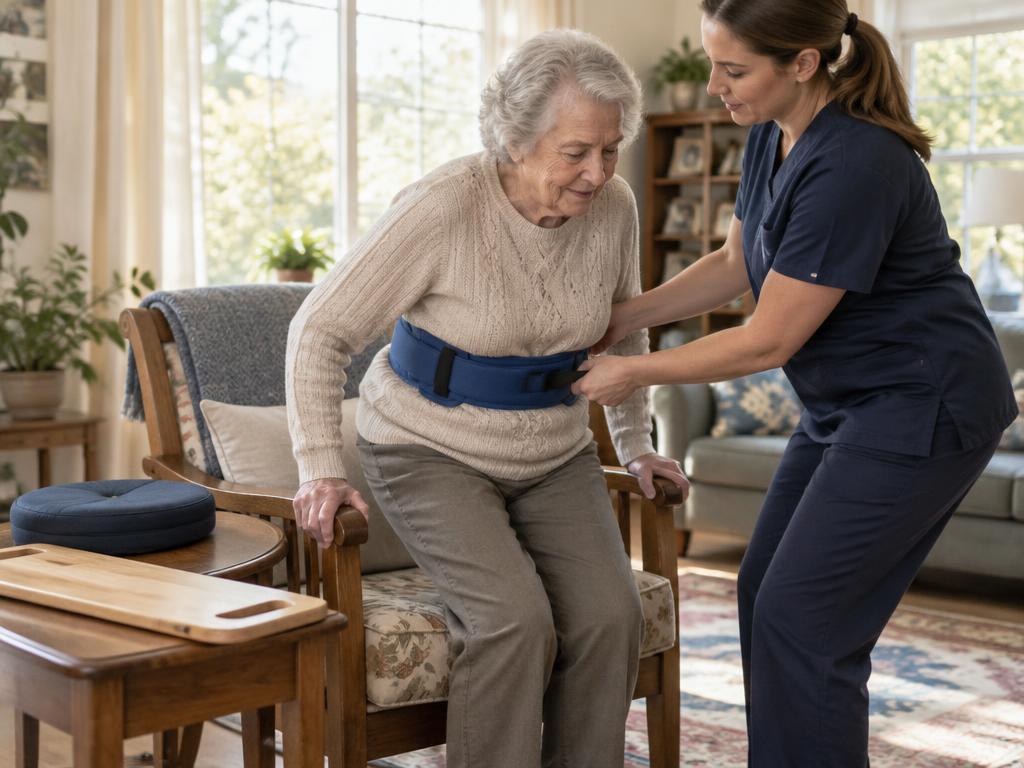
Start with technique and low-cost tools: a gait belt with handles, a transfer board or slide sheet for bed-to-chair moves, a swivel cushion for the car, and a bed assist rail for the first movement of the morning. A stand-assist pivot disc helps someone who can bear a little weight on their legs rotate without stepping.

When full assistance is needed, a powered patient lift is not a luxury — it is the equipment that lets home care continue. Sit-to-stand lifts suit people who can bear partial weight and hold a handle; full-body sling lifts suit those who cannot. Both require training. Ask the home health agency or a physical therapist to demonstrate in the actual room, and measure doorways and under-bed clearance before ordering.

Rule of thumb: if a caregiver is straining, holding their breath, or bracing their lower back during a transfer, the technique or the equipment needs to change today — not after someone gets hurt.

Caregiver using a padded gait belt to help a senior stand safely from a chair, with a transfer board and swivel cushion nearby

Caregiver supplies

Caregiver Accessories and Supplies

Equipping the caregiver protects two people at once. Back injuries end more home care arrangements than any single diagnosis.

A well-stocked caregiver kit includes a gait belt, disposable gloves, a slide sheet, a reacher, barrier cream, a thermometer and blood pressure cuff, a written medication list with dosages and prescribers, and a printed one-page summary for emergencies. Weekend and part-time caregivers benefit most from a shared checklist so nothing falls between visits.

For professional and in-home caregivers, add a second gait belt that stays with the client, non-slip shoes, and a documented transfer plan agreed with the family. For rural and homebound seniors, keep a spare set of cane and walker tips, spare batteries, and a charger in the car — replacement parts are rarely available locally on short notice.

Caregiver SuppliesEssential

Gait / Transfer Belt

Rated 4.7/5$15–$45Under 1 lbDurability: High

A gait belt fastens around the waist and gives a caregiver sturdy handles to hold instead of grabbing an arm or under the shoulders — a technique that injures both people.

Why you need it

Transfers between bed, chair, toilet and car are the moments caregivers most often get hurt. A $25 belt with handles transforms them.

Key features

  • Quick-release or metal buckle
  • Padded versions with 4–6 grab handles
  • Machine washable webbing
  • Sizes to fit 28–70 inch waists

Pros

  • Protects the caregiver's back
  • Gives the person being moved a steadier feel
  • Inexpensive and travel-friendly

Cons

  • Requires correct technique to be useful
  • Not appropriate after abdominal surgery or with certain ostomies
  • Never use it to lift dead weight

Best for: Safe caregiver-assisted standing and transfers

Buying tips: Ask a physical or occupational therapist to demonstrate once — ten minutes of instruction is worth more than any product feature. Fit the belt snugly over clothing at the waist, not the ribs, with room for a flat hand underneath.

Alternatives: A slide sheet or transfer board for bed-to-chair moves, a stand-assist pivot disc, or a powered patient lift when full assistance is required.

Travel

Travel & Portable Mobility Aids

Portable mobility aids are what turn visits to family, holidays and appointments back into ordinary events.

In the United States, airlines must transport canes, walkers, wheelchairs and scooters free of charge, and they do not count toward baggage allowances. Gate-check your own wheelchair at the aircraft door rather than at the ticket counter so you keep it as long as possible. Call the airline at least 48 hours ahead about lithium batteries; most accept packs under 300 watt-hours with terminals protected.

Pack a folding cane, a lightweight transport chair if distances will be long, compression socks for flights and long drives, a portable suction bar for the hotel bathroom, and any dressing aids used at home. Request wheelchair assistance when booking — it is free, and the escort knows the shortcuts through security.

For cruises, hotels and rentals, ask specifically about roll-in showers, bed height, door widths and whether the property rents equipment on site. Many destinations have local scooter and wheelchair rental services that deliver to the hotel, which is usually easier than flying with your own.

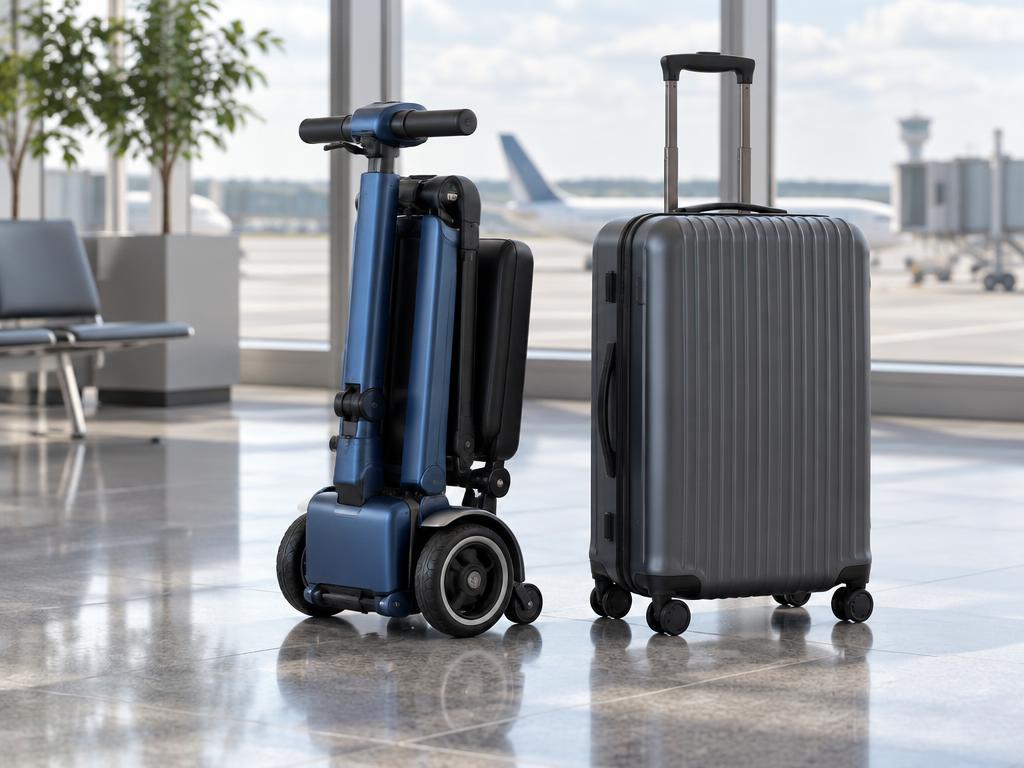
Folding travel scooter, lightweight transport wheelchair and collapsible cane packed beside a suitcase in an airport

Vehicles

Car & Vehicle Accessibility

Getting in and out of the car is a daily transfer, and small accessories often solve it for under $50.

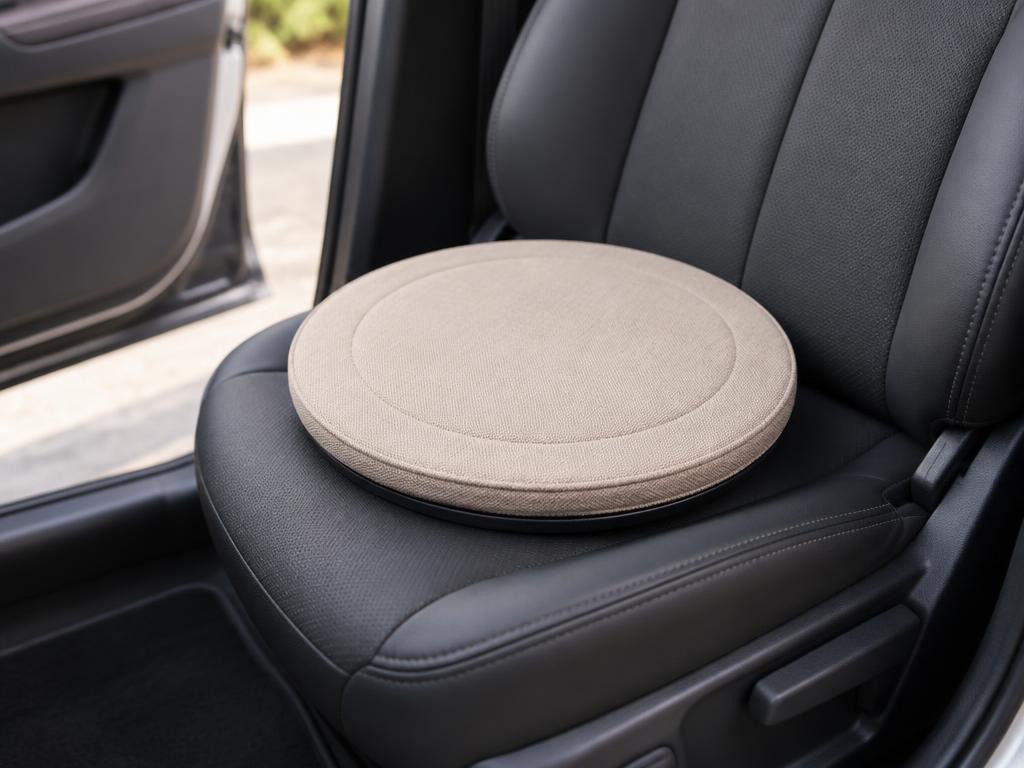
A swivel transfer cushion lets someone sit down facing out and rotate their legs in together rather than twisting a hip. A handle that hooks into the door striker gives leverage for standing. A long-handled seatbelt reacher and an extra-wide mirror finish the low-cost list.

For equipment, decide between lifting, ramping and hoisting. Travel scooters that break into 25–35 lb pieces suit most sedans. A hitch-mounted carrier keeps the trunk free but exposes the scooter to weather. An interior hoist or a hitch lift removes lifting entirely and is the right answer for daily use — budget $1,500 to $3,000 installed. A wheelchair-accessible van conversion is the largest step and worth consulting a certified mobility dealer about, especially since some manufacturers offer rebates toward adaptive equipment on new vehicles.

Senior using a swivel transfer cushion to get into a car while a folded travel scooter waits beside an open trunk

Buying guide

How to Choose Mobility Aids and Assistive Devices

What to buy first, what to skip, and how weight capacity, insurance and warranties actually work.

Which mobility aids are worth buying first

Buy in this order: bathroom safety, walking support, bedroom and night-time safety, emergency response, then comfort and powered equipment. This order follows risk, not price — and it keeps you from spending thousands on a scooter while the shower remains the most dangerous place in the house.

Safety vs. convenience products

Safety products change outcomes: grab bars, alert devices, ramps, handrails, correct walking aids. Convenience products change effort: cup holders, trays, organizers, cushions. Both have value, but buy every safety item on your list before the first convenience item.

Lightweight vs. heavy-duty equipment

Lighter equipment gets used, because someone has to lift it into a car. Heavier equipment is generally sturdier and carries higher weight ratings. Aluminum rollators run 12–18 lbs; steel versions 20–25 lbs. If the person loading it has arthritis or a bad back, weight beats every other spec.

Manual vs. powered options

Manual equipment is cheaper, lighter, repairable anywhere and never needs charging. Powered equipment preserves independence when strength or endurance is the limiting factor. Many households end up with both: a manual transport chair for the car and a powered chair or scooter for distance.

Weight capacity ratings explained

Capacity is tested for the user plus anything carried. Standard equipment is usually rated 250–300 lbs; heavy-duty or bariatric models run 400–600 lbs with wider seats and reinforced frames. Buy with margin — a rating met exactly leaves nothing for a bag of groceries, and exceeding it voids the warranty and stresses the brakes.

Budget buying tips

  • Rent anything you will need for less than three months.
  • Check medical equipment loan closets run by Area Agencies on Aging, churches, the VA, MS and ALS societies, and local senior centers — many lend walkers, wheelchairs and shower chairs at no cost.
  • Buy hygiene-sensitive items new (shower chairs, commodes, cushions); consider reconditioned for stairlifts, scooters and lift chairs from a dealer with a warranty.
  • Ask about tax deductions — medically necessary equipment may qualify.
  • Skip extended warranties on items under $100.

Durability considerations

Look for welded rather than riveted joints, sealed bearings, replaceable tips and wheels, and published parts availability. Equipment used daily for years should come from a brand that still sells the parts.

Insurance, Medicare and Medicaid coverage

Medicare Part B generally covers 80% of the approved amount for durable medical equipment after the deductible, when a doctor documents it as medically necessary for use inside the home and you buy from a Medicare-enrolled supplier. Canes, walkers, wheelchairs, power wheelchairs, hospital beds, patient lifts and the lift mechanism in a lift recliner commonly qualify. Grab bars, shower chairs, stairlifts and most bathroom safety equipment usually do not. Medicaid rules vary by state and some home and community-based waivers cover home modifications that Medicare will not. Medicare Advantage plans sometimes add over-the-counter allowances that cover small safety items — check your plan's catalog.

Warranty considerations

Read what is covered and for how long: frames often carry lifetime or five-year warranties while batteries, motors and upholstery may carry one year or less. Confirm whether service is in-home or ship-back — shipping a 70 lb power chair for repair is a genuine hardship.

Maintenance tips

  • Inspect cane and walker tips monthly; replace when tread is smooth.
  • Test rollator brakes weekly and tighten cables as they stretch.
  • Charge scooter and wheelchair batteries after every use, not only when low.
  • Wipe frames dry after bathroom or outdoor use to prevent corrosion.
  • Check that grab bars and bed rails are still firmly anchored every few months.
  • Test medical alert buttons monthly — most providers encourage it.

By situation

Life-Stage Mobility Recommendations

Needs change with recovery, seasons, housing and caregiving arrangements. Here's what to prioritize in each situation.

Post-surgery & rehab recovery

Short-term needs, often six to twelve weeks. Rent rather than buy whenever the need is temporary, and follow the discharge therapist's list first.

  • Rollator walker
  • Knee scooter
  • Raised toilet seat
  • Reacher and dressing kit
  • Shower chair

Everyday home living

Focus on the three highest-risk rooms: bathroom, bedroom and stairs. Small purchases here prevent the large ones later.

  • Grab bars
  • Motion-sensor nightlights
  • Bed assist rail
  • Lift recliner
  • Medical alert device

Travel & vacations

Airlines carry canes, walkers and wheelchairs free of charge and they do not count as baggage. Call 48 hours ahead for scooter battery clearance.

  • Folding travel cane
  • Lightweight transport chair
  • Travel scooter
  • Compression socks
  • Portable suction bar

Outdoor errands & appointments

Larger wheels, a seat and a bag matter more outdoors than indoors. Plan for distance, not just for the walk from the car.

  • Rollator with 10-inch wheels
  • Mobility scooter
  • Non-slip footwear
  • Cane with pivoting base

Assisted living & memory care

Check the community's equipment policy first — many restrict powered devices, bed rails and personal ramps. Label everything.

  • Rollator
  • Seat cushion
  • Adaptive clothing
  • Pill organizer
  • Overbed table

Multi-story homes (stairs)

Either bring living to one floor or make the stairs safe. A second handrail is the cheapest meaningful improvement.

  • Stairlift
  • Second stair handrail
  • A second walker for upstairs
  • Stair-edge contrast tape

Small apartments & limited space

Measure doorways and turning circles before buying anything wheeled. Narrow rollators and folding equipment earn their keep.

  • Narrow rollator
  • Folding shower seat
  • Wall-hugger lift chair
  • Foldable transport chair

RV and road trips

Weight and stowed size decide everything. Look for equipment that folds flat and secures against movement.

  • Folding electric wheelchair
  • Threshold ramp
  • Transfer swivel cushion
  • Portable grab handle

Multigenerational caregiving households

Equip the caregiver as thoroughly as the person receiving care. Back injuries end caregiving arrangements.

  • Gait belt
  • Transfer board
  • Powered patient lift
  • Bed wedge
  • Overbed table

Emergency preparedness & fall response

Decide in advance what happens after a fall, including who is called and how responders get in.

  • Fall detection pendant
  • Lockbox for responders
  • Charged backup phone
  • Written medication list

Interactive tool

Find My Perfect Mobility Aid

Answer four quick questions for a personalized mobility aid shortlist, an estimated total cost and a shopping list you can copy or print.

Mobility need
Mobility level
Budget
Top priority

Your personalized recommendations

Estimated total for essentials and in-budget upgrades: $1,565

Must-buy essentials

  • Grab bars (pair, installed) — Bathroom and hallway fall prevention(~$90)
  • Motion-sensor nightlights — Lights the bedroom-to-bathroom path(~$20)
  • Reacher/grabber tool — No bending or step stools(~$20)
  • Medical alert with fall detection (1st year) — Calls for help automatically(~$420)
  • Non-slip bath mats (in and out) — Cheapest fall prevention there is(~$30)

Nice-to-have upgrades

  • Bed assist rail — Safer sitting up and standing(~$60)
  • Power lift recliner — Stand up without help(~$900)
  • Gait/transfer belt — Safer assisted standing(~$25)

Planning tool

Mobility Aid Cost & Insurance Calculator

Set a budget, pick your main need, mark what you already own, and see essentials, upgrades and powered options with coverage notes.

Equipment you already have

Essential purchases

  • Grab bars — ~$90
  • Shower chair — ~$80
  • Raised toilet seat — ~$45

Recommended upgrades

  • Handheld showerhead — ~$40

Premium & powered

  • Walk-in tub or curbless shower conversion — ~$6,000

Essentials total

$215

Essentials + upgrades

$255

Budget remaining after essentials

$585

Saved by keeping what you own: $0. For a long-term need, buying usually costs less than 6–12 months of rental, and it is worth paying for higher weight capacity and a longer warranty. Medicare Part B generally covers 80% of approved durable medical equipment after the deductible when a doctor documents it as medically necessary for use inside the home; Medicaid coverage varies by state. Bathroom safety items and stairlifts are usually not covered. Always confirm with your plan before purchasing.

Printable

Printable Mobility Aid Checklist

Track purchases, priority, weight capacity, setup status and notes — then copy or print it for the family or the therapist.

0 of 10 items marked as purchased. Tick items off, note weight capacity, then copy or print the list for the store, the therapist visit or the family group chat.

Printable mobility aid purchase and setup checklist
DoneItemPriorityWeight capacityReceived & set upNotes
Grab bars (toilet + tub)
Shower chair or transfer bench
Rollator walker or cane
Medical alert with fall detection
Raised toilet seat
Motion-sensor nightlights
Reacher / grabber tool
Bed assist rail
Gait / transfer belt
Lift recliner or seat riser

Avoid these

Common Mobility Aid Buying Mistakes

Ten mistakes that show up again and again in caregiver reviews and returns.

  1. Mistake 1

    Buying equipment that's too heavy to lift or transport

    A 25 lb steel rollator that lives in the garage helps nobody. Weigh the folded product and picture the person who will lift it into the trunk.

  2. Mistake 2

    Choosing the cheapest option without checking weight capacity

    Standard equipment is typically rated to 250–300 lbs. Exceeding a rating is how frames bend and brakes fail.

  3. Mistake 3

    Forgetting bathroom safety equipment

    Families routinely spend thousands on powered mobility and skip a $40 shower chair in the room where the falls actually happen.

  4. Mistake 4

    Ignoring ease of use and learning curve

    If the brakes are hard to squeeze or the controls are confusing, the device will sit unused. Try before you commit whenever possible.

  5. Mistake 5

    Buying accessories before addressing the core need

    Cup holders and trays are not the purchase that changes a day. Solve walking, bathing and transfers first.

  6. Mistake 6

    Buying unreliable batteries for powered devices

    Use manufacturer-approved batteries and chargers. Off-brand cells lose range quickly and can be a fire risk.

  7. Mistake 7

    Skipping fall-detection or medical alert coverage

    For anyone alone during the day, this is not optional equipment — it is the difference between minutes and hours on the floor.

  8. Mistake 8

    Choosing low-quality or non-certified equipment

    Look for FDA-listed medical devices and recognized brands with published weight ratings and a real warranty.

  9. Mistake 9

    Underestimating battery range

    Plan for roughly 60–70% of advertised range once you account for hills, weight and battery age.

  10. Mistake 10

    Not testing fit and comfort before relying on it

    Handle height, seat depth and cushion firmness are personal. Ask an occupational or physical therapist to check the fit.

FAQ

Frequently Asked Questions

What are the most useful mobility aids for seniors?

For most people the short list is a properly fitted rollator walker or cane, grab bars in the bathroom, a shower chair or transfer bench, a raised toilet seat, and a medical alert device with fall detection. Together those cost a few hundred dollars and cover walking, bathing, toileting and emergency response — the four areas where independence is most often lost.

Which mobility devices are worth buying first?

Buy safety before convenience and buy the bathroom before anything powered. Grab bars, a shower chair, non-slip mats and good lighting come first; a walking aid second; powered mobility, lift chairs and stairlifts once the basics are in place and the long-term need is clear.

What should every caregiver keep on hand?

A gait belt, a slide sheet or transfer board, disposable gloves, a reacher, a well-stocked first aid kit, a written medication list, and a charged phone with the care recipient's doctors and pharmacy saved. Equipping the caregiver prevents the injuries that end home care arrangements.

What mobility products are best for fall prevention?

Grab bars at the toilet and tub, non-slip bath mats, motion-sensor nightlights along the bedroom-to-bathroom path, a second stair handrail, fresh non-slip tips on canes and walkers, non-slip footwear, and a monitored medical alert device with automatic fall detection. Removing throw rugs and cords costs nothing and matters as much as any purchase.

Are expensive mobility aids worth it?

Sometimes. Spending more generally buys lighter weight, better brakes, longer battery life, higher weight capacity and a real warranty — all of which matter for daily, long-term use. For short-term recovery, renting or buying mid-range is usually the better decision. Price alone is not a proxy for safety.

What products help make travel easier for seniors?

A folding cane, a lightweight transport chair, a travel scooter that disassembles, compression socks for long flights and drives, a portable threshold ramp, and a small bag of dressing and bathroom aids. Airlines transport mobility equipment free of charge and it does not count toward baggage allowances — call ahead about lithium battery limits.

What mobility aids should first-time buyers get first?

Start with an occupational therapist's home assessment if you can — Medicare often covers one with a doctor's order. Otherwise, begin with grab bars, a shower chair, a reacher and a correctly fitted cane or rollator, then reassess in a month before buying anything larger.

What's the best mobility scooter?

The best scooter is the one that fits your vehicle, your body and your terrain. Travel scooters that disassemble into 25–35 lb pieces suit people who need help loading; mid-size four-wheel scooters ride better outdoors; folding lithium models are best for air travel. Compare turning radius, weight capacity, ground clearance and real-world range rather than headline specs.

Which walking aid is best — a cane, walker, or rollator?

A cane suits mild balance issues and takes roughly 20–25% of weight off one leg. A standard walker gives the firmest support for people who need to lean and move slowly indoors. A rollator suits people who walk steadily but tire, and adds a seat and storage. A physical therapist can match this to your gait in a single visit, which is well worth the appointment.

What mobility aids make the best gifts?

Thoughtful, low-cost gifts: a quality reacher, non-slip footwear, a heated blanket or heating pad, a lighted magnifier, an easy-grip utensil set, motion-sensor nightlights, a walker bag or basket, compression socks, or a year of medical alert monitoring. Avoid gifting anything that needs professional fitting — canes, walkers and wheelchairs — without involving the recipient.