
Skip to content
Top Mobility Aids

Best Rollator Walker for Seniors

By the Top Mobility Aids Editorial Team · Updated:

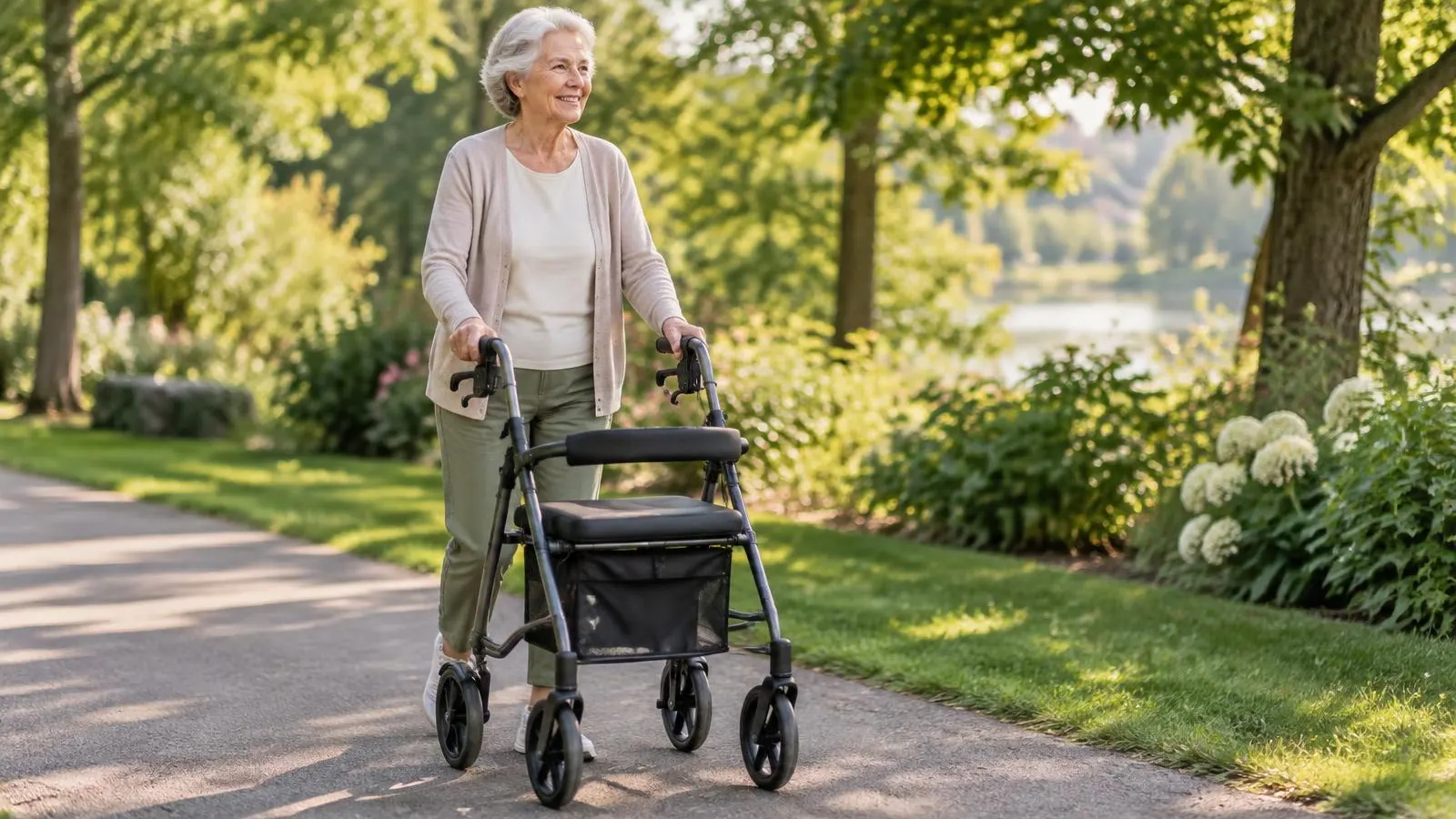
Senior using a four-wheel rollator walker outdoors

Affiliate disclosure: We may earn a commission if you purchase through links on this page at no additional cost to you. Our recommendations are based on independent research, product reviews from real users and caregivers, safety, comfort, ease of use, and overall value.

A good rollator can make everyday walking easier by providing additional support, a place to rest and convenient storage for personal belongings. However, rollators vary considerably in weight, wheel size, seat height, folding design, weight capacity and overall dimensions.

The best rollator walker for a senior therefore depends on much more than price. Someone who frequently loads a walker into a car may prioritize a lightweight frame, while another person may prefer larger wheels for outdoor use. Petite adults need to pay particularly close attention to handle and seat height, while larger users may require a reinforced heavy-duty frame.

In this guide, TopMobilityAids.com compares six rollators designed for different needs, including everyday use, travel, budget shopping, upright support, higher weight capacity and shorter users.

Table of contents
  1. Best Rollator Walkers at a Glance
  2. Rollator Comparison Table
  3. How We Chose
  4. Drive Medical Nitro Sprint
  5. Stander Wonder Rollator Plus
  6. Medline Basic Steel Rollator
  7. ELENKER Upright Rollator
  8. Medline Heavy-Duty Bariatric Rollator
  9. Drive Medical Nitro Sprint Hemi
  10. How to Choose a Rollator Walker
  11. Rollator vs Standard Walker
  12. Rollator Safety
  13. Frequently Asked Questions
  14. Final Verdict

Best Rollator Walkers at a Glance

This page contains affiliate links. We may earn a commission from qualifying purchases at no additional cost to you.

Drive Medical Nitro Sprint Rollator

Best Overall

Drive Medical Nitro Sprint Rollator

Strong combination of manageable weight, 350-pound capacity, large front wheels, comfortable seating and a compact folding design.

Read full review
Stander Wonder Rollator Plus with 8-Inch Wheels

Best Lightweight Travel Rollator

Stander Wonder Rollator Plus with 8-Inch Wheels

A lightweight and highly portable option for people who frequently transport their rollator in a vehicle or while traveling.

Read full review
Medline Basic Steel Rollator

Best Budget Pick

Medline Basic Steel Rollator

A straightforward four-wheel rollator offering a padded seat, storage and familiar loop-style brakes at a generally more economical price point.

Read full review
ELENKER Upright Rollator Walker

Best Upright Rollator

ELENKER Upright Rollator Walker

Uses elevated padded forearm supports rather than conventional hip-level rollator handles.

Read full review
Medline Heavy-Duty Bariatric Rollator

Best Heavy-Duty Rollator

Medline Heavy-Duty Bariatric Rollator

A reinforced rollator designed for users who require substantially greater weight capacity and a wider frame.

Read full review
Drive Medical Nitro Sprint Hemi

Best for Petite Seniors

Drive Medical Nitro Sprint Hemi

A lower version of the Nitro Sprint designed for shorter users who find standard rollators too tall.

Read full review

Rollator Comparison Table

Swipe sideways on a phone to see every column. Specifications can vary by size, color and model revision, so confirm the details on the exact Amazon listing before buying.

This page contains affiliate links. We may earn a commission from qualifying purchases at no additional cost to you.

Comparison of the best rollator walkers for seniors
RollatorBest ForApprox. Product WeightWeight CapacityWheelsSeatFoldingCheck Price
Drive Medical Nitro SprintBest Overall19 lb350 lb10-inch front wheelsYesSide foldingCheck Today's Price
Stander Wonder Rollator PlusTravel17 lb250 lb8 inchesYesCompact foldingCheck Today's Price
Medline Basic Steel RollatorBudget17 lb350 lb6 inchesYesFoldingCheck Today's Price
ELENKER Upright RollatorUpright support18 lb300 lb10-inch front wheelsYesFoldingCheck Today's Price
Medline Bariatric RollatorHeavy-duty25 lb500 lb8 inchesYesFoldingCheck Today's Price
Drive Medical Nitro Sprint HemiPetite users19 lb350 lb10-inch front wheelsYesSide foldingCheck Today's Price

How We Chose the Best Rollator Walkers for Seniors

There is no single rollator that suits every older adult, so we approached this guide the way a careful family member or caregiver would: by comparing the details that most affect comfort, safety and day-to-day convenience. We reviewed manufacturer specifications for each model and compared them side by side, paying particular attention to how each rollator would fit different body sizes, homes and routines.

We evaluated each rollator on:

  • Product weight
  • User weight capacity
  • Handle adjustability
  • Seat height
  • Seat comfort
  • Wheel size
  • Braking system
  • Folding mechanism
  • Portability
  • Storage
  • Indoor maneuverability
  • Outdoor usefulness
  • Suitability for different user sizes
  • Manufacturer specifications
  • Availability through Amazon

We considered the trade-offs that real households face. A lighter frame is easier to lift into a car but may carry a lower weight capacity. Bigger wheels roll more easily over sidewalk cracks but add bulk. Upright designs change how a person stands and steers. Rather than naming one product as the winner for everyone, we compared how well each model serves a specific need and assigned a clear "best for" label.

We also considered whether each product is readily available through Amazon so readers can check current pricing and details. Where a brand sells several similar variants, we have noted which specifications should be confirmed against the exact listing. Inclusion in this guide does not mean our editorial team has physically tested the product.

This page contains affiliate links. We may earn a commission from qualifying purchases at no additional cost to you.

Best Overall

1. Drive Medical Nitro Sprint Rollator – Best Overall

Drive Medical Nitro Sprint Rollator

Quick verdict

The Drive Medical Nitro Sprint earns our Best Overall designation because it combines a substantial 350-pound weight capacity, large front wheels, a comfortable seat, a convenient side-folding design and useful braking features in a relatively lightweight aluminum frame.

Key Specifications

Product weight
Approx. 19 lb (standard model)
Weight capacity
350 lb
Front wheels
10 inches
Seat width
Approx. 18 inches
Seat depth
Approx. 10 inches
Seat height
Approx. 21 inches (standard model)
Frame
Aluminum
Seat
Padded
Storage
Included
Folding
One-hand, side-to-side

Detailed review

A rare balance of weight and capacity

One of the Nitro Sprint's strongest advantages is the balance it strikes between how much it weighs and how much it can support. At roughly 19 pounds, the standard model remains manageable for many users or caregivers who need to lift a rollator into a car trunk or back seat. At the same time, its 350-pound weight capacity is substantially higher than many ultralight travel models, which often top out around 250 pounds. For many households, that combination removes the usual trade-off between a walker that is easy to carry and one that feels reassuringly sturdy.

10-inch front wheels

The large 10-inch front wheels are a defining feature. Compared with very small casters, larger wheels can help make transitions over sidewalk joints, pavement cracks, door thresholds and ordinary outdoor surface changes more manageable. That matters for seniors who walk to a mailbox, around a neighborhood or through a parking lot as part of their normal routine. Larger wheels are not a license to tackle rough terrain, however; gravel, grass, steep slopes and broken pavement still call for caution with any rollator.

Braking and speed control

In addition to standard loop-style hand brakes with a parking position, the Nitro Sprint includes an integrated slow-down braking feature. This gives users another way to moderate speed, which some people appreciate on gentle inclines or when they tire toward the end of a walk. It is a helpful extra layer of control, but it does not eliminate fall risk, and users should still practice applying and locking the brakes before relying on the rollator day to day.

Seat, back support and folding

The padded seat and contoured back support offer a comfortable place to rest during longer outings, such as a trip through a grocery store or a wait at a medical office. Unlike many rollators that fold front-to-back, the Nitro Sprint folds side to side. That produces a narrow folded profile that can stand upright and slip into a vehicle, a hall closet, a restaurant corner or the space beside an exam-room chair without taking up much floor area.

Storage and accessories

Storage is included for everyday items like a wallet, phone or water bottle, and the frame offers accessory mounting points for add-ons such as cup or cane holders. The overall styling is contemporary rather than clinical, which some users find makes them more willing to bring the rollator along. The main caveats are cost, since it is priced above basic steel rollators, and sizing: shoppers should confirm that the seat and handle heights suit the person who will use it.

What we like

  • 350-pound capacity
  • Approximately 19-pound aluminum frame
  • 10-inch front wheels
  • Padded seat
  • Slow-down braking feature
  • Side-folding design
  • Accessory mounting points
  • Contemporary appearance

What could be better

  • Costs more than basic steel rollators
  • Larger wheels may increase overall dimensions
  • Users still need to verify seat and handle height carefully

Best for: Seniors looking for a versatile everyday rollator that can transition comfortably between home use, errands and paved outdoor environments.
Best Lightweight Travel Rollator

2. Stander Wonder Rollator Plus with 8-Inch Wheels – Best Lightweight Travel Rollator

Stander Wonder Rollator Plus with 8-Inch Wheels

Quick verdict

The Stander Wonder Rollator Plus is especially attractive for users who regularly load their walker into a vehicle because it weighs approximately 17 pounds and folds considerably smaller than many conventional rollators.

Key Specifications

Product weight
Approx. 17 lb
Weight capacity
250 lb
Wheels
8 inches
Handle height
Approx. 32.75–35 inches
Seat
Built-in, with backrest
Storage
Basket and organizer pouch
Brakes
Locking hand brakes
Folding
Compact folding frame

Detailed review

Why product weight matters so much

Product weight is one of the most overlooked details when families shop for a rollator. A walker can feel perfectly comfortable while someone is walking with it and still be a struggle to lift into a car trunk several times a week. For an older adult with limited grip or shoulder strength, or for a caregiver who is also lifting groceries and a wheelchair, every pound counts. At approximately 17 pounds, the Wonder Rollator Plus is lighter than many conventional rollators, which commonly weigh closer to 18 to 25 pounds.

Compact fold

Its compact folding mechanism is the other half of its appeal. Folded, it takes up noticeably less space than a typical full-size rollator, which helps in small car trunks, back-seat footwells, apartment closets and hotel rooms. If the rollator is going to live in a car or be packed for visits to family, a smaller folded size can make the difference between a walker that comes along and one that gets left at home.

Wheels, seat and storage

Four 8-inch wheels sit between small indoor casters and larger outdoor-oriented wheels. They are generally well suited to indoor floors, shopping centers and paved sidewalks. The built-in seat and backrest provide a place to rest, and the basket and organizer pouch hold small personal items. The seat is smaller than some traditional rollator seats, so people who expect to sit often or for long periods may want to compare seat dimensions closely.

Capacity and handle height

The trade-off for that light frame is a 250-pound weight capacity, which is lower than several competing models in this guide. The handle-height range of roughly 32.75 to 35 inches is also narrower than some alternatives. Before buying, measure the height that feels right for the user, ideally with guidance from a physical therapist, and confirm it falls within this range.

Travel considerations

Its size and weight make it a natural candidate for travel, but we cannot guarantee how any airline, cruise line or train service will treat it. Policies for mobility devices vary and change, so check the specific carrier's rules before you fly or book.

What we like

  • Approximately 17 pounds
  • Compact folding design
  • 8-inch wheels
  • Seat and backrest
  • Basket and organizer
  • Easy vehicle storage

What could be better

  • 250-pound capacity
  • Limited handle-height range compared with some models
  • Seat is smaller than some traditional rollator seats

Best for: Seniors and caregivers who prioritize portability, compact storage and frequent vehicle transportation.

Best Budget Pick

3. Medline Basic Steel Rollator – Best Budget Pick

Medline Basic Steel Rollator

Quick verdict

The Medline Basic Steel Rollator is a practical option for shoppers who primarily want the core benefits of a four-wheel rollator without paying for premium materials or advanced folding systems.

Key Features

Frame
Steel
Product weight
Approx. 17 lb
Seat
Padded, with padded backrest
Storage
Under-seat
Brakes
Loop-style
Handles
Adjustable
Folding
Yes
Weight capacity
350 lb
Wheels
6 inches

Medline sells several Basic Steel Rollator variants. Confirm the exact model on the Amazon listing before relying on these specifications.

Detailed review

Steel construction pros and cons

Steel frames are a long-standing choice for basic rollators because they are durable and economical to produce. Many users appreciate the solid, planted feel. The downside is weight: steel is generally heavier than aluminum, which can make a steel rollator harder to lift into a vehicle or carry up steps. If the rollator will mostly stay at home or in one place, that extra weight may matter very little.

Seat, back support and storage

The padded seat and padded backrest give users somewhere to pause during a walk around the house, in a long pharmacy line or on a trip through a store. Under-seat storage handles everyday items like a purse, small parcels or a water bottle, freeing the hands to stay on the handles where they belong.

Familiar loop brakes

Loop-style brakes are the most common rollator brake design. Squeezing slows the walker, and pushing the levers down locks them for parking. Many people who have used a rollator before will already know how they work, and they are generally straightforward for caregivers to check and adjust.

Smaller wheels

Smaller wheels, around 6 inches on the referenced model, can work particularly well on relatively smooth indoor flooring and conventional paved surfaces. They also help keep overall size down. They are not inherently unsafe, but they may feel less smooth over cracks, thresholds and uneven outdoor surfaces than 8- or 10-inch wheels.

When a basic rollator makes sense

A lower-cost traditional rollator can be a sensible choice for someone who mainly walks indoors or around familiar paved areas and does not frequently lift the walker into a car. It can also work as a second rollator kept on another floor of the home or at a relative's house.

What we like

  • Generally economical
  • Sturdy construction
  • Padded seat
  • Back support
  • Under-seat storage
  • Familiar brake system
  • Straightforward design

What could be better

  • Less sophisticated folding system
  • Smaller wheels
  • Steel construction can add weight
  • Model specifications can vary

Best for: Budget-conscious users who need a straightforward everyday rollator.

Best Upright Rollator

4. ELENKER Upright Rollator Walker – Best Upright Rollator

ELENKER Upright Rollator Walker

Quick verdict

The ELENKER Upright Rollator differs from conventional rollators because padded forearm supports position the user's arms higher on the walker.

Key Features

Support style
Adjustable padded forearm supports
Seat
Built-in
Storage
Included
Folding
Folding frame
Weight capacity
300 lb
Product weight
Approx. 18 lb
Wheels
10-inch front wheels

ELENKER sells numerous upright walker models. Confirm the exact model on the Amazon listing before relying on these specifications.

Detailed review

Traditional vs upright rollators

With a traditional rollator, the hands grip handles positioned roughly at wrist or hip level. With an upright rollator, the forearms rest on padded supports set higher on the frame, and the hands hold grips at the front of those supports. The result is a different walking position, with the arms and upper body supported closer to chest height.

Who tends to prefer this style

Some users simply find this position more comfortable, especially people who dislike leaning forward over low handles or who prefer to bear some weight through the forearms rather than the wrists. It is a matter of preference and fit rather than a medical upgrade. An upright rollator does not correct posture, cure back pain, prevent falls or automatically make walking safer. Anyone considering this design for a specific condition should talk it over with a physical therapist.

Features

The ELENKER model referenced here offers adjustable padded forearm supports, a built-in seat for resting, storage for personal items and a folding frame. Its approximately 300-pound capacity on the referenced model places it in the middle of this group. As with any rollator, the brakes should be fully engaged before sitting.

Size and feel

Upright rollators are typically taller and bulkier than conventional models, so they may need more trunk space and can feel unfamiliar at first. Measure your vehicle and storage spots, and allow some time to get used to steering and braking from the forearm position.

What we like

  • Elevated forearm support
  • Padded armrests
  • Seating
  • Storage
  • Alternative to traditional rollator design

What could be better

  • Bulkier than many traditional rollators
  • May require more trunk space
  • Different feel from conventional walkers
  • Specifications vary considerably among ELENKER models

Best for: Adults specifically seeking an upright-style mobility aid with padded forearm support.

Best Heavy-Duty Rollator

5. Medline Heavy-Duty Bariatric Rollator – Best Heavy-Duty Rollator

Medline Heavy-Duty Bariatric Rollator

Quick verdict

This Medline heavy-duty steel rollator trades portability for a reinforced, wider frame and a much higher weight capacity than standard lightweight rollators.

Approximate Referenced Specifications

Weight capacity
500 lb
Product weight
Approx. 25 lb
Wheels
8 inches
Width between handles
Approx. 23.5 inches
Seat height
Approx. 22 inches
Handles
Adjustable range
Seat
Padded, with back support
Brakes
Loop-style
Frame
Reinforced, wider steel frame

Referenced specifications are based on Medline model MDS86800XWS. Confirm the exact model on the Amazon listing before relying on them.

Detailed review

Why higher capacity is a different category

A heavy-duty rollator is not simply a standard rollator with a bigger number on the label. To support up to 500 pounds on the referenced model, the frame is reinforced, the seat is wider and the overall structure is built to handle greater loads during walking, sitting and standing. Using a standard rollator above its rated capacity can stress the frame and brakes, so choosing a model rated for the user's weight is essential.

Reinforced frame and wider seat

The wider frame, with roughly 23.5 inches between the handles, gives larger users more room to walk inside the walker and a broader, padded seat to rest on. Back support and familiar loop-style brakes round out a straightforward, practical design. The 8-inch wheels are a reasonable middle ground for indoor floors and paved outdoor surfaces.

The portability trade-off

At approximately 25 pounds, this rollator can be substantially more difficult for some users or caregivers to lift into a vehicle than a rollator weighing 15 to 19 pounds. If it will travel regularly, have the person who will be lifting it try a similar weight first.

Measure before you buy

Because heavy-duty rollators are wider, measure home doorways, bathroom entrances, hallways, vehicle trunk openings and the cargo area before ordering. A rollator that cannot pass through the bathroom door will not help where it is often needed most.

What we like

  • Up to 500-pound capacity on referenced model
  • Reinforced construction
  • Wider frame
  • 8-inch wheels
  • Padded seat
  • Back support

What could be better

  • Approximately 25-pound product weight
  • Larger overall dimensions
  • Harder to transport
  • Unnecessary bulk for users who do not require higher capacity

Best for: Larger adults who specifically require increased user weight capacity and a reinforced frame.

Best for Petite Seniors

6. Drive Medical Nitro Sprint Hemi – Best for Petite Seniors

Drive Medical Nitro Sprint Hemi

Quick verdict

The Nitro Sprint Hemi incorporates many of the premium features of the standard Nitro Sprint into a lower configuration intended for shorter users.

Key Features

Configuration
Lower (Hemi) height
Product weight
Approx. 19 lb
Weight capacity
350 lb
Front wheels
10 inches
Seat
Padded, contoured back support
Folding
Side-folding
Brakes
Includes slow-down braking feature
Storage
Included

Confirm the exact current Nitro Sprint Hemi model, seat height and handle range on the Amazon listing before purchase.

Detailed review

Why fit matters more for shorter users

Many rollators advertise adjustable handles, but the adjustment range does not always go low enough for petite adults, and the seat height usually does not adjust at all. Shorter users should compare the actual minimum handle height and the seat height against their own measurements rather than assuming any adjustable rollator will work.

What to check

Handle height affects elbow position and how naturally the user can stand while walking. Reach matters too: if the handles are set too far forward or too high, the user may lean or overextend. When sitting, the user should be able to place both feet flat and securely on the floor. A seat that is too high can make sitting down and standing up more difficult and less controlled for a shorter person.

Nitro Sprint features in a lower frame

The Hemi keeps many of the standard Nitro Sprint's strengths, including a 350-pound weight capacity, 10-inch front wheels, a padded seat with contoured back support, a side-folding frame, the slow-down braking feature and built-in storage. That makes it a notable option for shorter users who want the same versatility rather than a stripped-down model.

Fit is still individual

A lower configuration does not guarantee proper fit. We have not listed a specific recommended user height because that should be confirmed against the exact current model. Measure the user, compare the listed seat and handle dimensions, and consider asking a physical therapist to confirm the right settings.

What we like

  • Lower configuration
  • 350-pound capacity
  • Large front wheels
  • Padded seat
  • Side-folding design
  • Premium Nitro Sprint features

What could be better

  • More expensive than basic rollators
  • Lower sizing does not guarantee proper fit
  • Seat and handle dimensions still need to be checked

Best for: Shorter adults who find conventional rollators too tall.

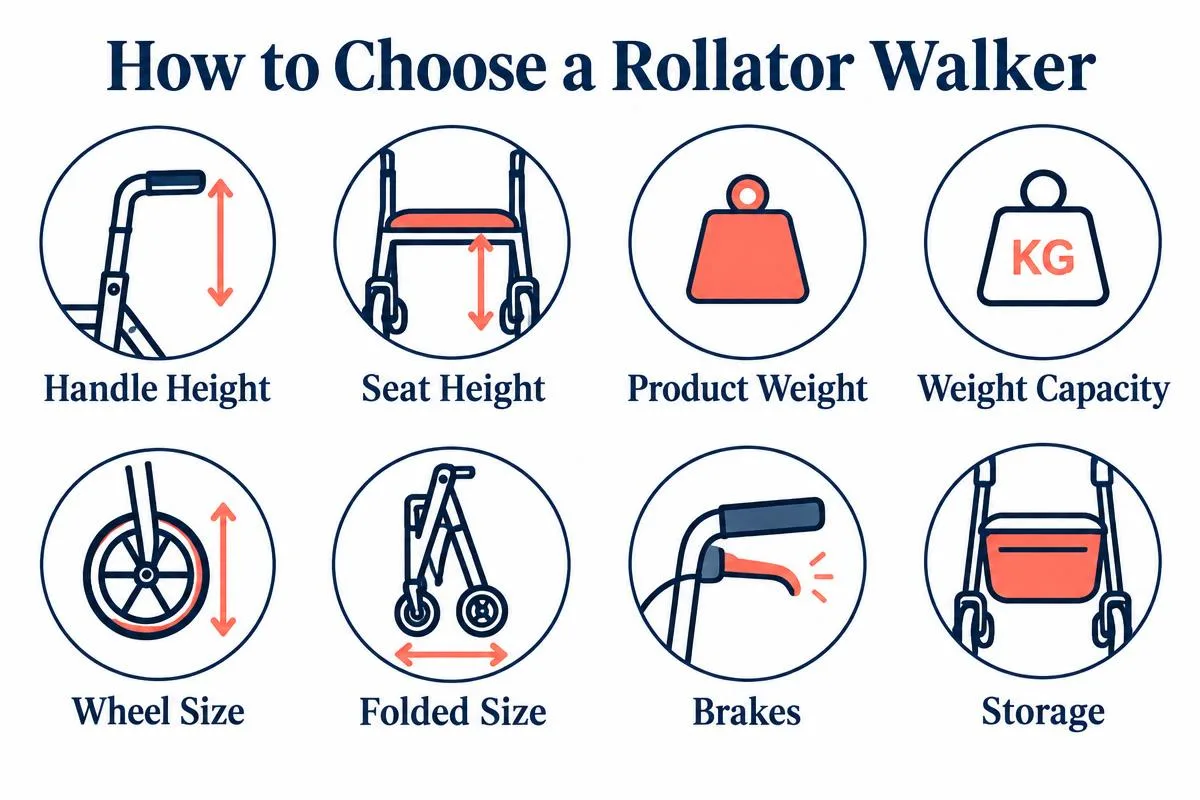
How to Choose the Best Rollator Walker for a Senior

Factors to consider when choosing a rollator walker for seniors

1. Handle Height

Handle height affects how naturally a person can stand and walk with a rollator. Handles set too low can encourage leaning forward, while handles set too high can push the shoulders up and make steering awkward. Many people find a comfortable starting point with the handles near wrist level when the arms hang relaxed, but the right setting is individual. For anyone with significant mobility concerns, a fitting by a physical therapist or another qualified healthcare professional can be very useful.

2. Seat Height

Most rollator seats do not adjust, so seat height deserves close attention. Shorter adults should be able to sit with both feet flat on the floor; a seat that is too high can make sitting and standing harder to control. Taller adults may find a very low seat difficult to rise from. Compare the listed seat height with the height of a chair the user finds comfortable.

3. Product Weight vs Weight Capacity

Product weight

How much the rollator itself weighs. This matters every time someone lifts it into a car, up a step or into a closet.

Weight capacity

The maximum user weight specified by the manufacturer. Staying within it protects the frame, seat and brakes.

Both numbers matter, and they often pull in opposite directions. Ultralight models are easy to carry but may have lower capacities, while heavy-duty models support more weight but are harder to transport. Choose a capacity with comfortable headroom above the user's weight, then pick the lightest frame that meets it.

4. Wheel Size

  • 6-inch wheels keep a rollator compact and maneuverable on smooth indoor floors.
  • 8-inch wheels are a versatile middle ground for homes, stores and paved sidewalks.
  • 10-inch wheels can make sidewalk joints, thresholds and ordinary outdoor surface changes easier to roll over.

Larger wheels help with everyday transitions, but wheel size alone does not make a rollator safe for rough terrain such as gravel, grass or broken pavement.

5. Indoor vs Outdoor Use

Think about where the rollator will spend most of its time. Carpet adds rolling resistance, while hardwood and tile are smooth but can be slippery when wet. Shopping centers, medical offices and restaurants usually have smooth floors but tight spaces between displays, chairs and tables. Sidewalks and paved parks introduce cracks, curbs and gentle slopes. A rollator for indoor and outdoor use should balance maneuverability with wheels large enough for the outdoor surfaces the user actually visits.

6. Width

Measure the narrowest places the user needs to pass, including bathroom doors, hallways, kitchen passages and bedroom entrances, and compare them with the rollator's overall width. Wider heavy-duty frames in particular may not fit through older bathroom doorways.

7. Folding Size

Consider where the folded rollator will go: a car trunk, the back seat, a hall closet or a small apartment storage space. Side-folding designs tend to stand narrow and upright, while compact travel models fold smaller overall. If you travel, check folded dimensions and confirm carrier policies in advance.

8. Brakes

Most rollators use loop-lock brakes: squeeze to slow, push down to lock in the parking position. Some add speed-control features such as a slow-down brake. Users need enough hand strength and dexterity to squeeze and lock the brakes reliably, so try the brake action if possible and check that brakes are adjusted correctly when the rollator arrives.

9. Storage and Accessories

Built-in storage keeps hands free for the handles. Common options include under-seat bags, baskets and organizer pouches, and many rollators accept add-on cup holders, cane holders and phone holders. Avoid hanging heavy bags from the handles, which can affect stability.

Which Rollator Is Best for Different Types of Seniors?

Rollator Walker vs Standard Walker

A traditional standard walker generally has no wheels or two front wheels. The user lifts or slides it forward in controlled steps, which keeps movement slow and deliberate. A four-wheel rollator, by contrast, rolls continuously and normally includes hand brakes so the user can slow down and park it.

Many rollators also include:

  • Seats
  • Backrests
  • Storage
  • Four wheels

Neither type is automatically better. The appropriate walking aid depends on the person's balance, strength, gait, home environment and individual mobility requirements, along with professional recommendations where appropriate.

Are Rollator Walkers Safe for Seniors?

An appropriately selected and properly adjusted rollator can provide valuable mobility support, but no mobility aid eliminates fall risk. These general habits help users get the most from any rollator:

  • Properly adjust handle height
  • Verify the walker is fully open and locked before use
  • Engage parking brakes before sitting
  • Never sit while the rollator is moving
  • Follow manufacturer weight limits
  • Maintain brakes and wheels
  • Use extra caution on slopes
  • Use caution on uneven surfaces
  • Avoid hanging heavy objects from handles
  • Follow the manufacturer's instructions

This information is general and is not individualized medical advice. Talk with a healthcare professional about what is right for a specific person.

Frequently Asked Questions About Rollator Walkers for Seniors

What is the best rollator walker for seniors?

There is no single best rollator for every senior, because fit, body size, strength and where the walker will be used all matter. In this comparison, the Drive Medical Nitro Sprint is our overall choice because it combines a 350-pound capacity, large 10-inch front wheels, a padded seat, a side-folding design and useful braking features. The Stander Wonder Rollator Plus may be more appropriate when low product weight and portability are the top priorities.

What is the difference between a rollator and a rolling walker?

The terms are often used loosely. A rollator usually means a walker with three or four wheels, hand brakes and often a seat. A rolling walker more commonly refers to a standard frame walker with two front wheels and rear glides or tips, which the user pushes forward without hand brakes. Some retailers use the terms interchangeably, so check the wheel count and brakes on any listing.

Are rollators good for elderly adults?

Rollators can be appropriate for many older adults who need some walking support and benefit from a place to rest. They are not suitable for every balance, strength or gait condition, because they roll freely and require the user to control speed and braking. A physician or physical therapist can help decide whether a rollator, standard walker or another aid is the better fit.

What is the best lightweight rollator walker for seniors?

Among the products compared here, the Stander Wonder Rollator Plus is tied with the Medline Basic Steel Rollator for the lowest product weight at approximately 17 pounds, and it folds compactly for vehicle storage. Keep in mind its 250-pound weight capacity and narrower handle-height range.

What is the best rollator for a petite senior?

Lower configurations such as the Drive Medical Nitro Sprint Hemi are designed for shorter users. Rather than relying on height alone, measure the user's comfortable handle height and the seat height that lets their feet rest flat on the floor, then compare those numbers with the listed specifications.

What size wheels are best on a rollator?

Smaller wheels, around 6 inches, keep a rollator compact and work well on smooth indoor floors. Eight-inch wheels are a versatile middle ground for indoor and paved outdoor use. Larger 10-inch wheels can make sidewalk cracks and thresholds easier to roll over, but they add size and do not make any rollator safe for rough terrain.

Can you sit on a rollator walker?

Only on models designed with a seat. Fully engage both parking brakes before sitting, sit down slowly with the rollator against a stable surface if possible, never sit while it is moving, and always follow the manufacturer's instructions and weight limit.

What should I look for when buying a rollator for an elderly parent?

Focus on proper sizing, including seat height and handle height, the user weight capacity, the weight of the rollator itself, wheel size, how the brakes work, your home's doorway and hallway widths, how you will transport it, where it will be stored and your parent's strength and balance. When in doubt, ask a physical therapist to help with fit.

Our Verdict on the Best Rollator Walker for Seniors

For most shoppers looking for a versatile four-wheel rollator, the Drive Medical Nitro Sprint is the overall recommendation in this comparison. It pairs an approximately 19-pound aluminum frame with a 350-pound weight capacity, 10-inch front wheels, a padded seat, a side-folding design and helpful braking features, a combination that adapts well to home, errands and paved outdoor paths.

Another model may be a better choice depending on the user's needs:

  • Stander Wonder Rollator Plus: portability and travel
  • Medline Basic Steel Rollator: budget-conscious shoppers
  • ELENKER Upright Rollator: people who specifically prefer forearm-style upright support
  • Medline Heavy-Duty Rollator: higher user weight capacity
  • Nitro Sprint Hemi: shorter users

The best rollator is not simply the model with the most features. It is the model that fits the user correctly, works well in the places they visit most often and can be handled comfortably and confidently.

Compare Our Six Rollator Picks

This page contains affiliate links. We may earn a commission from qualifying purchases at no additional cost to you.

Drive Medical Nitro Sprint Rollator

Best Overall

Drive Medical Nitro Sprint Rollator

Seniors looking for a versatile everyday rollator that can transition comfortably between home use, errands and paved outdoor environments.

Stander Wonder Rollator Plus with 8-Inch Wheels

Best Lightweight Travel Rollator

Stander Wonder Rollator Plus with 8-Inch Wheels

Seniors and caregivers who prioritize portability, compact storage and frequent vehicle transportation.

Medline Basic Steel Rollator

Best Budget Pick

Medline Basic Steel Rollator

Budget-conscious users who need a straightforward everyday rollator.

ELENKER Upright Rollator Walker

Best Upright Rollator

ELENKER Upright Rollator Walker

Adults specifically seeking an upright-style mobility aid with padded forearm support.

Medline Heavy-Duty Bariatric Rollator

Best Heavy-Duty Rollator

Medline Heavy-Duty Bariatric Rollator

Larger adults who specifically require increased user weight capacity and a reinforced frame.

Drive Medical Nitro Sprint Hemi

Best for Petite Seniors

Drive Medical Nitro Sprint Hemi

Shorter adults who find conventional rollators too tall.

How TopMobilityAids.com Reviews Mobility Products

TopMobilityAids.com evaluates mobility products using manufacturer specifications, product design, dimensions, weight capacity, portability, usability features and suitability for common mobility needs. Unless specifically stated otherwise, inclusion in one of our guides does not mean that our editorial team has physically tested the product. We encourage readers to verify current specifications with the manufacturer and consult an appropriate healthcare professional when selecting mobility equipment for significant balance or walking limitations.

Explore our full guide to the best mobility aids